July 19, 2011

REVIEW: Jack Goes Boating (dir. Phillip Seymour Hoffman)


Cast: Phillip Seymour Hoffman, Amy Ryan, John Ortiz, Daphne Rubin-Vega

There are a lot of things Jack can’t do: two of them are swimming and cooking. As a chauffeur for his uncle’s limousine company, Jack spends his life counting the miles through New York’s hinterland of crumbling freeways and soot-stained tower blocks. He has locked all the colour of life away in a Reggae collection and a beanie hat that hides a tumbling mess of half-formed dreadlocks. But the time has come to open up his heart to the tempest, and see how it flies.

Jack agrees to a double date with best friend Clyde, his wife Lucy, and her colleague Connie. The timid first encounter prompts Jack to make two rash decisions: he agrees to go boating with Connie in the summer, and he promises her a dinner party. There are two problems: Jack can’t swim, and Jack can’t cook.

The ensuing film centres on Jack’s journey to improve himself and grasp life more firmly. It is a heart-warming exploration of how one man’s change can ripple through the lives of those closest to him. Jack is the hero, the centre of the story; but he is also a fulcrum, and his trio of friends will find the balance of their lives upended as he pivots and shifts and, finally, comes to rest once more. Nowhere is this shift clearer than in best friend Clyde. Jack may always have been a kind and attentive friend, but unburdened by the complexities of adult life he can hardly have been a helpful confidante. As Jack begins the journey into adulthood, the relief with which Clyde finally opens up about his haggard marriage is powerful and moving.

There is little tragedy or suspense – no churning upheavals or heartbreaking ennui – but this hole is plugged by the charming characters and bittersweet dialogue. Tradition dictates that Jack and Connie should fumble awkwardly, leaving feelings buried until it is almost too late, and then eventually, courageously, race through an airport as the score climaxes. But Jack and Connie aren’t like that at all…

They are hopelessly, wonderfully unromantic. When Jack suggests “a little good night kiss? Y’know, nothing overwhelming” Connie replies, “I’m not ready for penis penetration”. But then, surprisingly, when they do become intimate, Connie remarks, “I like how you touch me, how you barely touch my skin”. She has a powerful sensuality that has not spoiled, but untouched has become more refined. Jack might seem like the sort of man to shy away from passion; and when Connie suggests, “I might be ready, if you overwhelm me, if you force me” we assume this will be too much for our timid hero. He stands for an eternity, breathing heavily. Will he flee? Can he… then BAM… he bull charges her onto the bed and lands with a thud atop her. This man is charging forward with the weight of the world on his shoulders, and he won’t let that slow him down anymore.

Their disarming strength and confidence allows the film to turn away from cliché and venture into territory that is underexplored in romantic comedies: the necessity of friendship, the floodgate that opens when you invest in another life, the childish impulses that awaken when your heart is fiddled with.

Too many great actors ruin their directorial debuts by falling back on the crutch of their own performances; but the powerful, shy Phillip Seymour Hoffman does not allow himself so central a role in the fabric of his first film. This is not the sort of grumbling, frenetic tour de force we have come to expect from him as an actor; but it is a quiet, patient romantic comedy that breathes freely and never feels too much like a showcase for its director-star.

The film captures the warm glow and crisp freshness of New York in winter, but it is not a crass festive vision done up in tinsel and fairy lights. As with everything else in this film, it relies on a beguiling sincerity and quietness: frosty park benches, soiled piles of ploughed sidewalk snow, a strong winter sun melting the icy skyscrapers at dusk, all accompanied by the melancholy sounds of Grizzly Bear - perfect New York winter music.

June 18, 2011

REVIEW: Life in a Day (dir. Kevin Macdonald)


“It’s the 24th of July, and it’s the best day ever.”

When Kevin Macdonald – the acclaimed director behind Touching the Void and The Last King of Scotland – decided to curate youtube footage into a feature film, he could not have expected to receive over 44,500hrs of footage from 192 countries. People of all ages, from every walk of life, and from every corner of the world celebrated the idea of recording their daily activities and contributing to this time capsule for the youtube generation.

That phrase, “youtube generation”, carries so many ugly connotations – of twenty-something Western youths giggling at kittens in jars and strumming along to True Love Waits – but this film highlights how the farthest reaches of civilisation have embraced this unique phenomenon. Humble American families, Arabian bachelors, quiet African tribesmen, terminally ill housewives – thousands upon thousands recorded the trivial thoughts and activities of Thursday 24th June 2010. The resulting film, Life in a Day, is an astounding, baffling, and strangely moving tapestry of human civilisation.

Under Macdonald’s guidance, the film never feels incomprehensibly fast as the hundreds of clips flitter past. He avoids the obvious dichotomies (East vs. West, US vs. Islam, old vs. young, etc) and chooses simply to tell the story of a day, from 00:01 to 23:59. The resulting story allows for an almost tranquil rumination on the subtle differences between cultures:

How do you cook an egg? In a wok on a street corner? Carefully prepared in a kitchen? Hastily cracking shells over a fire in the Armenian forests? And how do you brush your teeth? On the toilet? In an old pewter mug? With your toes? And how do you get to work? Riding a Shetland pony? Jumping on the back of a Paris bus? Sharing a motorbike into Delhi with three other men? The film allows glimpses of so many ways of living, and the differences between them are more often funny and charming than ominous or sombre.

Macdonald also allows a number of threads to trail through the meta-narrative: an American mother suffering from cancer, a Korean man who has been cycling the world for a decade, a young Latino boy who shines shoes and obsesses over Wikipedia. These eclectic stories are never exploited for laughs or tears – there is no time for any of that – but the emotional involvement we feel for this chorus of characters colours our understanding of the steady stream of images and clips that flows around them.

The film takes a dark turn with footage of the Love Parade Festival in Germany. The images of herds of innocent revellers collapsing in on one another in the unavoidable crush, while thousands of helpless onlookers watched, is painful and futile. From here the film delves into the Dionysian chaos that, some say, lies beneath the peaceful coherence of everyday life: street fights, baying crowds, Las Vegas excess, Football thugs, rockets and fireworks, bombs, darkness, fire and chaos.

The ending is purposefully trivial and remote: as midnight approaches, and the thunder and lightning envelopes her car in a parking lot, a young woman’s tear-filled eyes glimmer with pride and hope. She has been at work all day, and nothing of note has happened; but somehow she feels that something wonderful has taken place. A life shouldn’t need to be heroic, controversial, or glamorous for the wider world to take notice of it. Wonderful little things happen every day, and finally a film has come along that celebrates each and every one.

May 01, 2011

REVIEW: Hanna (dir. Joe Wright)


Cast: Saoirse Ronan, Eric Bana, Cate Blanchett, Jessica Barden, Olivia Williams, Jason Flemyng

We are deep in the Scandinavian wilderness: the land of Narnia and countless Grimm fairytales. A half frozen river chortles harmlessly through the plains, and on its banks baby bears roll carelessly in the snow. But something is stirring in the trees, and we catch a glimpse of a child huntress, barely in her teens, with white hair and icy blue eyes. She has stolen upon a magnificent elk, and with the whip-thud of an arrow she dispenses with her quarry. This is no child, this is a killer… this is Hanna.

This opening seems to tell us everything we need to know about Joe Wright’s Hanna: the story of a teenage girl (Ronan) trained from birth to be the perfect assassin. But as she stands over the elk, pistol in hand, and pulls the trigger, the title of the film – HANNA – explodes across the screen in vibrant red and white, reminiscent of Michael Haneke or some angry German punk video. Joe Wright isn’t going to stick to the rules here; he is taking us somewhere new, and we are strapped in ready to go.

Hanna’s father, Erik (Bana), is a rogue CIA agent who has escaped to this remote wilderness, and dedicated his remaining days to training his daughter in the art of self-defence. Now that she has come of age, he decides to let her out into the world to meet her fate – a twisted CIA operative, Marissa (Blanchett), who will stop at nothing to kill her. Hanna and Erik break up and agree to meet in Berlin once Marissa has been killed, but this difficult and lonely journey takes Hanna halfway across the world, through hidden desert bunkers, strange gypsy countryside, and looming industrial strongholds.

Being critical, the story is familiar and many of the occurrences and plot points are too convenient. But this film isn’t about jaw-dropping twists or eerie realism; it is about taking the classical elements of an action thriller (escaping from bunkers, hiding from German double-agents, smuggling away on ferries, etc) and blending them with an exciting and adventurous vision. Joe Wright mixes elements of fantasy, hyperrealism, and music video to create the sort of action thriller that Danny Boyle would be proud of. Long, choreographed chase sequences are broken up by striking, languid road trip settings; all accompanied by a thundering electronic score courtesy of The Chemical Brothers.

Physically Hanna is superhuman, and is capable of extraordinary strength and agility. But mentally she is a child, threatened by the size of the world, and the sheer number of people and distractions in it. Nobody could have played this role but Saoirse Ronan. She is a captivating cross between Catherine Deneuve and some bewitching Gaelic Goddess. She is effortlessly unaware of the camera’s obscuring glare, and always seems to float above the earthly machinations of  “acting”. She is unreachable, and utterly compelling.

This film channels the haunting fantasy of the Brothers Grimm, with the hazy, colourful power of Lolita, and the thumping action of a Bourne film. It is not an original story, and in other hands it might have appeared trashy; but Joe Wright is in great shape, and a string of successes has given him the confidence to break out into a new and energetic style. His vision, along with Ronan’s near flawless performance, elevate this interesting story into one of the must-see films of 2011.

April 29, 2011

REVIEW: I Saw the Devil (dir. Jee-woon Kim)

Cast: Byung-hun Lee, Min-sik Choi, Gook-hwan Jeon, Ho-jin Jeon, San-ha Oh, Yoon-seo Kim

Jee-woon Kim's crazed vengeance thriller follows the bewildering cat-and-mouse conflict between Kim Soo-hyeon, one of Korea’s most ruthless secret agents, and Kyung-chul, the psychopath that murdered his wife. We are introduced to the serial killer almost immediately, and Kim captures him soon after, meaning that mystery and suspense are quickly dispensed with. The ensuing story takes its queue from a surprising act: after beating Kyung-chul half to death, Kim nurses him back to health and leaves him with a thick wad of cash. The good cop has broken bad, he isn’t interested in the death or imprisonment of his wife’s killer, he wants to play…

As Kyung-chul preys on new victims and attempts to lay low with accomplices, Kim regularly appears to provide another agonising and tortuous beating. Kyung-chul slowly realises that he will never escape the unpredictable punishments of his ghostly nemesis: the hunter is now the hunted, and his face, frozen in fear, becomes the mask of his many victims. He escapes, of course, and Kim is forced once again to hunt him down before the desperate murderer can kill another of Kim’s dearest intimates.

Jee-woon Kim doesn’t bother too much with subtlety or realism (there are severed heads tumbling out of forensic briefcases, for heaven’s sake). Instead he concentrates on eking out a truly haunting thrill from the long, mundane battle between the bumbling psychopath and his ghostly, grieving tormentor. It is a masochistic vision that takes great pleasure in the slow and methodical instruments of violence and pain. The moral story revolves around the futility of vengeance; and by the end of the film we really are numb to all the anger and violence.

The only respite we are given from this bleak and horrific vision is the maniacal sense of humour that skips in and out of scenes like Macbeth’s porter. It is a grotesque hysteria that only adds to the chilling tone of the film, but that doesn’t make it any less funny in the moment. Watch out for the moment that Kyung-chul agonisingly attempts to remove a screwdriver from his hand, only for the handle to pop off instead!

Kim’s relentless vision would be even less watchable if it weren’t for the superb performances of his leading men. Byung-hun Lee (a precociously talented actor who looks barely half of his 40 years) is superb as the broken cop. He has the capacity to appear entirely in control – a hero – and then in the flicker of an eyelid he descends into violent madness. He is utterly convincing as the grieving man who is only just learning what he is capable of.

When we first meet Min-sik Choi, our rampaging psychopath, it is only Kim’s sledgehammer bluntness that alerts us to the fact he is a madman at all, so innocent and charming is his demeanour. But as we sink deeper into his grasp, Choi finds alarming new ways to lower himself further into the mind of the beast.

April 20, 2011

REVIEW: Thor (dir. Kenneth Branagh)


Cast: Chris Hemsworth, Natalie Portman, Tom Hiddleston, Anthony Hopkins, Stellan Skarsgård

It is difficult to watch this spate of Marvel films without sensing the derision with which they will be viewed by future generations. The way we snigger at Thundercats, so the teens of tomorrow will stare at us with revulsion when they discover that we not only survived a period of history where Iron Man 2 was considered the crowning highlight of the summer, but we were actually proud of it!

Thor, this year’s Marvel blockbuster, feels much the same as Iron Man 2 last year, and Captain America isn't going to break the mould when it is released in July The creative team behind this bland and forceful slagheap have picked the pockets of Hollywood’s recent success stories: the epic fantasy of Peter Jackson, the bullying energy of Michael Bay, and the tongue-in-cheek humour of Gore Verbinski. I am not especially enamoured of any of these Hollywood icons, so the pillaging of their respective muses is of trifling importance to me. But it is strange that the same legions of fanboys that flock to see their films also constitute the very demographic that allows this vacant and farcical Marvel franchise to sully their names and own our summers.

Thor is the headstrong son of Odin, King of Asgard and the unofficial figurehead of the ‘Nine Realms’. As Odin ages and his authority over the realms weakens, the Asgardians’ nemeses the Ice Giants begin to grumble, and another galactic war seems inevitable. Thor, persuaded by his silver-tongued brother Loki, tries to take matters into his own hands; but he succeeds only in speeding up the descent into war, and getting himself banished to Earth without his trusted hammer. While Loki steals to power in Asgard and slips towards the dark side, Thor must use his time in exile to grow into a reliable leader, so that he can return home and battle the forces of darkness.

The film… oh wait, he trots around after Natalie Portman while he’s on Earth… is the cinematic equivalent of diamante: it dazzles, but in a cheap and chintzy way. During the opening section we are given the entire history of intergalactic conflict in about thirty seconds; and I was too busy thinking up gags like, “where was this brevity in Hamlet, Kenneth?” to bother picking holes in the daft background narrative. After the history lesson, we retire to the floating, bronze and glass city of Asgard – the “brightest star in the firmament”. Somebody, somewhere, is proud of the art direction and animation that brings this city to life, but it just looks like a Lord of the Rings fan film. Even in three-dimensions it looks two-dimensional; and the costumes are a laughable cross between Spartacus and The Rocky Horror Show. In this setting, the twin delights of Anthony Hopkins and Tom Hiddleston (one of our country’s finest young talents) seem awkward and, rightly, ashamed.

When Thor arrives on Earth, Branagh substitutes CGI for cheap gags as our mighty hero is felled by a tazer and then a tranquiliser dart. Natalie Portman and Stellan Skarsgård are far too talented for their hopelessly under-developed comic book characters; and we breathe a bigger sigh of relief than Thor himself when his allies arrive from Asgard to take him back to the realm of turgid animation.

It seemed, for a while, as though graphic novel adaptations were reaching their own post-modernity. Fanboys were becoming aware of their own existential choices, auteurs were twisting the old clichés into something closely resembling art, and The Watchmen finally got its big screen debut. But this Marvel series proves that there are still millions of people who want nothing more from a summer blockbuster than the costumes and characters of their youth, filmed in 3D with expensive animation techniques. Well they are welcome to it. I for one will be spending the summer outside, looking forward to an autumn filled with pretentious, award-hungry indie flicks.

April 10, 2011

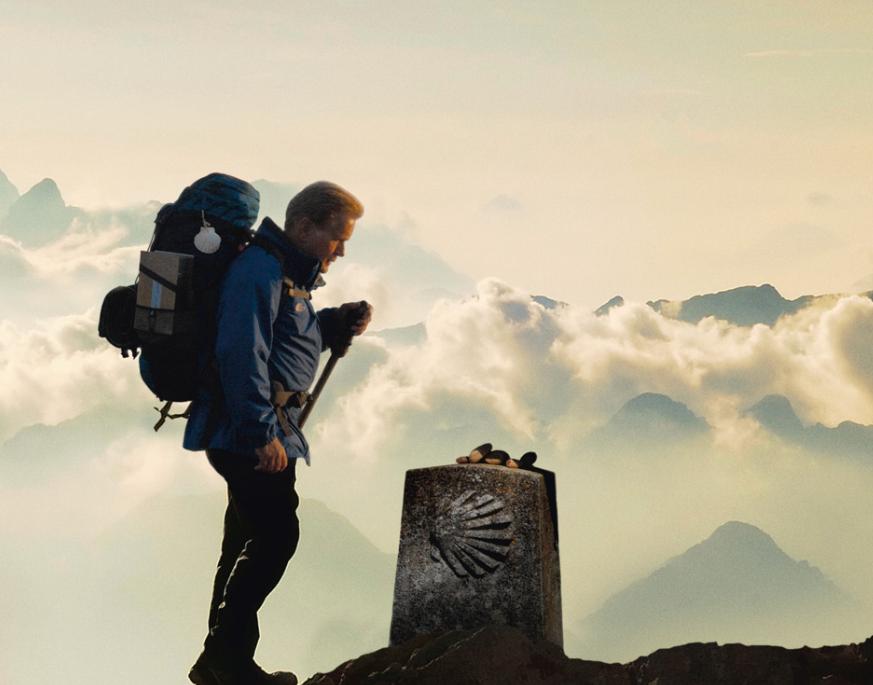
REVIEW: The Way (dir. Emilio Estevez)


Cast: Martin Sheen, Emilio Estevez, James Nesbitt, Deborah Kara Unger, Yorick van Wageningen

Tom is playing golf with his Country Club buddies in California when he receives news that his estranged son Daniel has been killed in a storm in the Pyrenees. Daniel was one day into the famed ‘Camino de Santiago de Compostela’ – an epic two month pilgrimage across the mountains from France to Spain, to the supposed resting place of St James. Tom travels to France to collect the ashes; and after a tormented, sleepless night he decides to take the trip in Daniel’s place, wanting to better understand the son he never knew.

But Tom is not alone for long, for the pilgrimage is a busy route populated with the world’s devout, overweight, and nicotine addicted. Joost is a sensitive and powerful Dutchman hoping to lose enough weight to persuade his wife back into the bedroom; Sarah is a sardonic Canadian with a smoking problem and a difficult past; and Irishman Jack, despite the torrential flow of words pouring from his mouth, is suffering from a rare case of writer’s block. These troubled souls – attracted to Tom’s aching, stubborn silence – form a makeshift gaggle, and help one another on their respective journeys.

Estevez’s script never quite does justice to the indescribable beauty of the pilgrimage. For each of the lonely souls that trudges through these mountains, the journey is an ethereal challenge: mundane and desperate, yet brilliant and life changing. But Estevez imposes a traditional narrative of highs and lows that will be enjoyed by even the most hardened of Hollywood hacks. This is supposed to be an adventure of discovery; but the route is all too familiar, the destination all too obvious.

The script is overly wordy, filled with twee clichés and simple emotional responses for actor and audience alike – do “sad”, do “elated”, do “flustered”. Long sequences that could have been beautifully rendered in silence are filled with the blabbering dialogue of a filmmaker too scared to film quietness in all its untameable beauty. Similarly, Estevez uses crass ghostly hallucinations to evoke the painful feelings of loss and guilt from which Tom is suffering; and every time ‘ghost Daniel’ appears on screen you can almost hear the frowns of those viewers hoping for a touch of subtlety.

But somehow, despite the simple and sometimes obtuse storytelling, there is something strangely intimate and mesmerising about this film. Estevez and his father, Martin Sheen, have a clear artistic chemistry, and a rare level of honesty that translates beautifully onto the screen. Sheen is excellent as Tom: he is fragile and confused, but still ruddy and headstrong. His explanation, to his doctor, that he is “going overseas to bring Daniel home” is a peculiarly American, almost military reaction to grief. We watch the walls of his California Country Club life come crashing down around him, and we know he is scared, exhilarated, and somehow relieved by it all.

Another reason for the mesmerising beauty of the film is the physical location of the pilgrimage. This long, meandering path has been etched into the ridges and fields of the Pyrenees for hundreds of years, and it doesn’t require a religious sensibility to feel overawed by the calm, gentle power of the area. It is not a beauty on the scale of the canyons of Utah or the mountains of Montana, but it is an unassuming beauty that lends the film a sense of eternal hopefulness.

April 01, 2011

REVIEW: Sucker Punch (dir. Zach Snyder)

Cast: Emily Browning, Abbie Cornish, Jena Malone, Vanessa  Hudgens… you get the picture

When Baby Doll tries to murder her drooling, abusive stepfather, she accidentally kills the angelic younger sister that she was trying to protect. She finds herself interred in an impossibly cold, creaking asylum; and locks herself away in an imaginary world to escape the pain. But as she moves around this alternate reality she quickly realises that she has jumped out of the frying pan and into the smoke-stained harem of a ruthless, sleazy pimp called Blue Jones. Fortunately, she discovers allies in the form of her alluring peers: Rocket, Sweet Pea, Blondie, and Amber.

Baby Doll decides to escape from the harem (and the asylum of her reality) with the help of her new accomplices. One essential part of her plan is to distract onlookers with her extraordinarily mesmerising dance routines; but in order to do this, she must remove herself to yet another plane of her imagination. It is this third and final plane that, one presumes, first got Zach Snyder’s juices flowing. It is an alternate reality that sees the burlesque girls dressed in all manner of military and “school girl” attire, brandishing heavy metal weapons and fighting everything from dragons to Nazi zombies. It is so far ‘over-the-top’ that I am amazed Snyder managed to keep it inside the Earth’s atmosphere for long enough to milk a few expensive Los Angeles lunches out of it.

The world will immediately judge this film with Snyder’s CV of comic book adaptations in mind; but this really has more in common with the disjointed stories and simple ‘level’ structures of early video games. The characters unlock new “worlds” and gather “tools” that will aid them in the final mission against the “big boss”. And with Hollywood’s recent myopic fascination with graphic novels, it is almost refreshing to see a filmmaker taking at least some inspiration from the aesthetic (but not the narrative) of retro video games.

Unfortunately, the video game vibe and bizarre fantasy world drown out what could have been an intriguing, noirish story of female teenage vengeance. There is something in the asylum/ harem stories that could have resulted in a fascinating film: a sort of Girl, Interrupted/ Sin City hybrid, with a gang of Lolitas tearing around a neo-noir dystopia reeking revenge on all the adults that have hurt them. But Snyder’s thirst for attention and dick-swinging enormity means that we spend far too much time stomaching the preposterous concoctions of Baby Doll’s deepest imagination instead.

The aesthetics of the film mirror this point perfectly. The first two levels are reminiscent of The Watchmen: using just the right amount of CGI to make the world feel fantastic and “graphic”, but permeating with enough reality to evoke the dirt and ageing smells of an asylum or harem. But when we are thrust into the final plane the CGI just feels tinny and weightless. When CGI is done well it can be an exciting and affecting tool, but when it is done badly it is a bore. It doesn’t matter how “big” the thing on screen is (an army of monsters, a burning cathedral, etc), it is too divorced from anything real to have any value: it is only so many pixels, and it is meaningless.

Emily Browning’s china Baby Doll is a pleasure to watch. Her quivering lip and watering eyes hide a terrifying capacity for calculated violence; she is a cross between a Happy Tree Friend and some darling tween heroine from a Nickelodeon cartoon. The other performances are half-etched: swaying between over-emotional and under-dressed, and usually merging the two.

One thing you cannot deny is the unflinching madness of Snyder’s idea. He isn’t apologising, stuttering or toning things down. As is often the case with this man, he is screaming at the top of his lungs, with a huge smile on his face.