Showing posts with label film. Show all posts

September 12, 2012

Butterflies and Bruises: Alma Har'el's Fjögur píanó


N.B. Click on the image above or scroll down to the bottom to watch the film.

How would you tell the story of love? Split it up into acts and set pieces? A sleek dialectic of heady triumphs and devastation? Give it a beginning without an end? Impossible. Love is a hazy netherworld. A performance of repetition. A choreographed dream.

And what colour would you paint it? Rich, dark, Renaissance crimson? You’d be wrong to. Love has a pale colour palette of flesh and curtain lace. Ruptured by smeared charcoal and finger-scraped scars. Gentle plum bruises. Butterflies and shawls that warn more than they delight.

Alma Har’el’s beautifully conceived film for Sigur Ros’ Fjögur piano is an astounding exploration of love: bleak and indicting, yet strangely hopeful. Cautious, honest, and deeply moving.

Shia LeBouf and Denna Thompson tumble majestically through a staggering and intimate performance. Painfully rehearsed honesty boxed in by a bedroom window frame.

Diving into trashy, colourful, hedonistic video guilt. Glaring aquamarine. MTV and ketamine. Generation something.

Slipping silently into a room filled with butterfly memories. Carefully preserved. Muted mauve melancholy. Calm. A delicate and cherished place they intrude upon with the people they've become – crashing in at dawn, trailing the mire of late nights and unblinking eyes.

Pushing each other into sudden frenzied anger. Volatile. Locked in to one another. Free falling.

Then suddenly absent. Panicked and lonely. Fragile.

Then clashing again. Tearing and grasping at each other. Frenzied hand marks tracked in tar. Laying in a nest of hair and tear stream smears. Frozen mid fight in a petrified, breathless sleep.

Waking to a new day. A new tussle of love…

Love. The most impossible dilemma and the simplest truth. A shifting, ungraspable boundary we yearn for like a desert horizon - longing for that crisp canyon cut while we're swallowed whole by the endless earth.

The sweet Harpy song that tears you away from the things you knew and throws you headlong into a gathering storm. All life's lessons unlearned in an instant.

Love is endless splendour. Bewildering and dangerous. Blamed and cherished. The suture for our deepest wounds. Never. Ever. Forgotten.
The Halcyon bird.
The Phoenix that survives the flames.

September 04, 2012

REVIEW: Anna Karenina (dir. Joe Wright)


Cast: Keira Knightley, Aaron Taylor-Johnson, Jude Law, Matthew Macfadyen, Kelly Macdonald, Olivia Williams, Domhnall Gleeson

Anna Karenina (Knightley) has settled quite happily into the safety and luxury of marriage to a respected St Petersburg aristocrat by the name of Alexei Karenin (Law) – a steely, stoic man with watery eyes and thinning hair. But on a visit to Moscow to save her brother's marriage, she meets the youthful and charming Count Vronsky (Taylor-Johnson). Their first meeting is marred by the tragic death of a railway worker, but there is no mistaking what has passed between them… they are in love. Forced into exile by a society that cannot accept their forbidden tryst, Anna and Vronsky find themselves alone, shackled together and tumbling headlong towards tragedy. There can be no peace for them, only misery and greatest happiness.

Joe Wright’s adaptation of Leo Tolstoy’s masterpiece is a wonderfully theatrical affair. Scene transitions involve magical, clunking, mechanical sets and hordes of sooty stagehands in period garments. Many scenes that should take place in streets or restaurants actually take place in the atriums, hallways, and rafters of a gigantic Russian theatre. Sometimes a scene appears to be on location, but suddenly a wall pulls away and we find ourselves back beneath the hulking proscenium arch.

Wright’s stylish vision successfully evokes the theatrical nature of late 19th Century Russian aristocracy in a new and exciting way. But the story relies too heavily on this visual treat for pace and energy. The flashy modern aesthetic – part Fosse, part Gondry, part Brecht – cannot be relied upon to update the tattered subject matter. What relevance does Tolstoy's story of forbidden love have at a time when our heir apparent has married his (alleged) mistress without so much as a raised eyebrow? How much more important are films like Shame that deal with the consumptive, addictive power of lust in a modern society where every need is catered for, and nothing is out of bounds?

That aside, there are also the usual pitfalls of reducing a 900 page tome into a modern feature film. Tolstoy’s novel is timeless because of the minutiae; Wright’s film is over a century out of date because it is forced to deal in generalisations. Characters are half-etched, dialogue over simplified, entire story strands overlooked. The cast can hardly be blamed for failing to mark their characters with anything approaching real emotion (with the exception of Domhnall Gleeson whose performance as Levin is breathtaking).

We are left with an entertaining but hollow story filled with entertaining but hollow characters. By the end, you’ll feel as though you’ve just left one of St Petersburg’s many large social gatherings: so many people you desperately wanted to meet, but as the carriages arrive you’re left with nothing but a procession of strangers and ghosts, known by name but nothing else.

May 15, 2012

REVIEW: Casa de mi Padre (dir. Matt Piedmont)

Cast: Will Ferrell, Diego Luna, Gael Garcia Bernal, Genesis Rodriguez

To make fun of a genre film, you really have to love the genre. When you watch Blazing Saddles - or Don’t Be a Menace to South Central While Drinking Your Juice in the Hood - it feels like the filmmakers are ribbing a dear old friend, rather than spitting on a hated foe. When you watch the later Scary Movies there is no joy to be had, because the passion for horror cinema has disappeared. Fortunately, by the end of the opening scene of Casa de mi Padre, we are left in no doubt that Matt Piedmont and his gang of talented artistes have an unabashed passion for the trashy Mexican Westerns of the 1950s and 60s. I don’t know if it’s the intentionally disastrous continuity errors, the badly painted backdrops, or the fact that Will Ferrell speaks in seemingly fluent Spanish… but something tells you that these guys really love what they’re doing. Maybe too much.

Armando Alvarez (Ferrell) is, as his father regularly points out, not the sharpest nacho on the platter. Compared to his recently returned prodigal brother, Raul (Luna) – a sharp-suited, slick-haired lothario – well, let’s just say you wouldn’t leave Armando alone to pet your rabbit (and if you think that’s some sordid analogy, you need to read Of Mice and Men… immediately). Raul’s return from Mexico City, and the announcement of his engagement to the jaw-dropping Sonia (Rodriguez), are greeted with screams of praise from the entire Alvarez ranch… finally Raul has returned to save the family!

Unfortunately, Raul didn’t make his money the hard way in the city. He’s a major drug baron with a long list of enemies, and his return to the family ranch brings unwanted attention from the local drug lord Onza (Garcia Bernal), who also happens to be Sonia’s uncle. When Armando discovers that his brother is a no good gangster, he realises his time has come to take the mantle of hero and patriarch, and save his family from the wolves and coyotes gathering at the gates.

If that brief synopsis sounds melodramatic then I’ve still probably underdone it! This is easily as uproariously clichéd and on-the-nose as any of the wonderful B-movies from that era. This is pure send-up, pure farce. You’re never allowed to settle into the story and start the laborious process of “caring” about the characters, because every time you start down that road, Garcia Bernal sticks three cigarettes in his mouth at once, of Ferrell attempts to help a lady onto a horse but gives up halfway and leaves her hanging awkwardly off the side. It’s a mad-dash slapstick caper with wonderfully shoddy sets and intentional ham acting.

Of course, being objective, that’s as much a tick in the ‘con’ box as it is in the ‘pro’. There’s plenty of room for fun in a film with some heart, and removing all the emotional depth from any human story – no matter how melodramatic and funny – is a shame. But at a trim 84-minutes, there’s plenty to keep us entertained and I can’t imagine anybody leaving the cinema dissatisfied.

And the whole production actually works as a new canvas for the wonderful Will Ferrell. We’ve seen him in his own projects and in a few great dramas in recent years, but this is the first time we’ve seen him in a feature film that is as surreal and farcical as his early SNL sketches. The camp madness that surrounds him here lends his grumpy upturned smile, shifting bear-like eyebrows, and twinkly blue eyes a strangely mature and sturdy edge. Compared to everything around him, he seems to be underacting! It’s an interesting and enjoyable spectacle.

April 18, 2012

REVIEW: American Reunion (dir. Jon Hurwitz, Hayden Schlossberg)


Cast: Jason Biggs, Alyson Hannigan, Chris Klein, Thomas Ian Nicholas, Tara Reid, Seann William Scott, Mena Suvari, Eddie Kaye Thomas, Eugene Levy, Jennifer Coolidge,

Ten years after that fateful, ‘virginity-busting’ prom night… nothing happened. There was probably some sort of reunion, but Jim, Kevin, Oz, and the rest of the gang were too content in their lives to dig up any of those old feelings and memories. Three years later, however, and everybody is miserable: Jim and Michelle’s leporine flame has been extinguished by the arrival of their first child; Kevin, now a full-time househusband, is too scared to tell his wife how much he hates reality TV; and Oz presents a sports newscast and has the ditsy pin-up girlfriend to prove it (she’s a queen bitch, and couldn’t be less suited to our rugged, cuddly lacrosse star.)

It’s clear a trip back home is exactly what the boys need to get a bit of perspective on their lives. Fortunately, that all-important 13th High School Reunion has arrived – what a great excuse to get the old band back together!

Finch arrives before they’ve even entered their first bar: screeching up the street on a supercharged motorcycle with tales of his adventures in Latin rainforests. Shortly after, they run into the one person they’d hoped to avoid… Stifler. Ah, Stifler: still living at home with his slutty mother, and even as an office temp he manages to wreak havoc wherever he turns. The moment he arrives the shots start flowing, and we sense that everything is slipping out of control in much the same way it did thirteen years ago.

That’s all I’ll give you in prose, but here’s a little list of buzzwords to whet your appetite: an 18th birthday party by a lake, more awkward conversations with Jim’s dad, bondage gear, taking a dump in a beer cooler, more awkward moments in Jim’s kitchen, MILF chants, waking up next to Vicky, waking up next to Heather, waking up next to Stifler’s mum (Eugene Levy, you dawg!), realising you’re not in High School anymore and it’s time to grow up, waking up next to Finch’s mum.

Well, that about covers it. There is nothing new here: nothing progressive in the script, nothing original in the comedy or performances, nothing complicated in the narrative. But it’s not a ‘new’ film… it’s a reunion! You can sense it as soon as you glance around the cinema at all the other late-twentysomethings giggling with glee and remembering all the naughty little things they did in their teens, after they first saw American Pie. Anyone who remembers the heady teen thrills of the original film can’t help but feel a pang of nostalgia the moment Jim wanders into his childhood bedroom. It’s a treasure to revisit a place with so many fond memories, even if the memories aren’t technically real… or ours.

March 16, 2012

REVIEW: Contraband (dir. Baltasar Kormákur)


Cast: Mark Wahlberg, Ben Foster, Kate Beckinsale, Giovanni Ribisi, Lucas Haas, Diego Luna

Getting out of the game… it’s so hard, it almost makes you not want to get into the game in the first place. If Carlito and Michael Corleone couldn’t work it out then nobody ever will. In Baltasar Kormákur’s Contraband, Mark Walhberg plays Chris Farraday: a major smuggler transporting drugs and counterfeit money into the impenetrable USofA via the world’s major cargo lines. But... ah blast! He’s just done his last job, and we missed it. Ah well, everybody out of your seats, lets see what’s showing on screen sev... wait... what’s this? Farraday’s cowardly little brother-in-law just got himself into trouble with the biggest gangster in New Orleans? and now Chris has to dive back “into the game” to save the youngster’s life? Well, it looks like we’ve got a bit of a film on our hands after all.

So here we are: a reluctant criminal mastermind has reassembled his trusted crack team to bring in “one last heist” to save the life of his little brother. If Gone in Sixty Seconds was Speed, then this is Speed 2: it’s the same story… just on a massive boat. Fortunately for us, this is no shimmering ocean cruiser: it’s a hulking, rusted leviathan full of shifty-eyed dock workers and a pompous captain with a thick Southern drawl and a cracked, bitter, evil face. We can smell the stench of oil and metal. We can feel the cramped, tinny confines of the sleeping quarters. Kormákur possesses that very Icelandic ability to translate the salt and grime of the ocean onto film; and it makes for a surprisingly gritty and believable tone for this unabashed, action-packed blockbuster.

It’s when the crew touch down in Panama that the film bolts out of the gates, dragging us through the Latin dust like an angry bull. They have a matter of hours to locate their contact, load the huge crates of counterfeit bills into a truck, and get back to the ship before anyone notices they've left. Unsurprisingly the plan falls apart, and suddenly it’s a race against time that is frantic and powerful enough to whip us up into a frenzy. Unfortunately, the unrelenting force of our hero's progression actually damages the suspense. The film is so eager to get to Farraday's climactic, heroic ending that we are never really given time to doubt his success or feel he might lose.

The twists and turns of the ending are in turns exciting and hilarious, but again, they are never exactly “edge-of-your-seat”. Ben Foster, Diego Luna, Giovanni Ribisi and J.K Simmons provide wonderful support as the 'bad guys', but their power is muted by the inevitability of Farraday’s unimpinged success.

All in all, this is an exciting, evocative, and beautifully shot action movie with some great central performances. It feels gritty and dirty despite its obvious Hollywood sheen; and the ending is still very entertaining despite its truth-stretching and predictability.

March 01, 2012

REVIEW: Wanderlust (dir. David Wain)


Cast: Paul Rudd, Jennifer Aniston, Justin Theroux, Alan Alda, Ken Marino, Malin Akerman

In America, you have to be for something or against it. Democrat or Republican, North or South, hawk or pacifist, vegan or carnivore. At one end of the scale you might find a man in a golf shirt driving a Lincoln 4x4 between his various mistresses while his frail, slutty wife drinks herself into a stupor in front of their 65" plasma. At the other end, you'll find a gang of nudist, vegan winemakers practicing free love on a ranch commune in Georgia. People who live in New York are uniquely privileged in being able to avoid this dialectic: they can own a "micro-loft" apartment and buy locally produced groceries from a "village store", whilst still working for a giant corporation and owning the 65" plasma. But what happens when your company goes bust and you can't afford to live in 'The City That Doesn't Have To Make Up It's Mind' anymore? You have to choose: are you with the guy driving the Navigator between his suburban pile and his lucrative Portaloo company? Or are you with the free-lovin', hummus-dippin' hippies?

This is the central premise of 'Wanderlust', David Wain's latest creation starring the louche and sparkly-eyed Paul Rudd, and the still-somehow-smiling Jennifer Aniston. When George and Linda's NYC dream comes crashing down around them they are forced to move to Atlanta to live with George's jockish, unbearably "American" brother, Rick (played by co-writer Ken Marino). On route they stop off at a roadside ranch called Elysian to rest their heads, but discover themselves captivated by the free-spirited and light-hearted community of oddballs that resides there. After a few days under his brother's thumb, George decides they should return to the ranch and allow their spirits to truly wander free for the first time. What follows is a hilarious and observant take on America's modern day hippie subculture - nudity, peyote and all - and what happens when middle-class people try to embrace it.

David Wain is probably best known these days as the creator of Role Models - another charming and funny Paul Rudd vehicle - but he was also a key proponent of the wonderful 90s sketch troupe The State, and co-collaborators pop up all over this film. Ken Marino picks up a screenwriting credit as well as starring as the utterly pathetic and detestable Rick; and Joe Lo Truglio also stars as Wayne, the nudist winemaker. American comedy veteran Alan Alda also gives a delightful performance as the frail, acid-frazzled founder of Elysian. Other familiar relationships have shaped the cast of this project: Jennifer Aniston and Paul Rudd spent years together on the set of Friends, and Aniston's current beau Justin Theroux stars as Seth, the talisman and lothario of the commune. In fact the only person that doesn't have an obvious connection is Malin Akerman; and the reasons for inviting her along are self-evident.

I labour this point because of the old adage, "you only get out of it what you put into it". If you put a gaggle of like-minded, familiar, and hysterical friends in an idyllic, summertime location and set a camera rolling, you'll make something hysterical, charming, and friendly. That's how it works. This film isn't going to stick in your mind because of a stirring and original narrative or heart-wrenching lead performance; it's going to stick there because it is just good fun, plain and simple.

It is also laugh-out-loud hilarious. The mixture of breezy ad-libbing, masterful comic timing, and a brilliant, observant script should be enough to make the most dismissive viewer chuckle. Who wouldn't laugh when Seth, asked why he sleeps outside in the rain, says, “I drink the nourishment that God is feeding me through her cloud teats.”Anyone who dismisses this as "another Jennifer Aniston film" would be doing an unforgivable disservice to the legion of talented comedians and comic filmmakers involved. And, frankly, they'd be doing a disservice to Aniston too. Maybe she'll never win an Oscar, but she has put the hours in throughout her career and fashioned herself into the sort of wilful, doe-eyed comedienne that the world learned to love with Meg Ryan.

Still not convinced? This film has the best cameo appearance since Bill Murray in Zombieland. There… now you have to watch it.

February 15, 2012

REVIEW: In Darkness (dir. Agnieszka Holland)


Cast: Robert Wieckiewicz, Benno Fürmann, Agnieszka Grochowska, Maria Schrader, Herbert Knaup

In Darkness is perhaps the bravest setting for a film in recent years: not because of its social context (although in dealing with the ransacking of a Polish ghetto by German forces, it certainly stakes a claim), but because it is set almost entirely in the dark and fetid confines of a sewage system.

When news of an impending attack spreads through the ghetto of Lvov, Leopold Socha agrees to aid a group of Jews into the city’s sewers. Socha is the only man left in Lvov capable of looking after the sewers, and is trusted by the local authorities and their German overseers to maintain the labyrinth of tunnels and caverns that burrows beneath the crumbling city. His decision to aid the group is born out of a need for money (he dislikes “Yids” as much as the rest of his country folk, and has no qualms telling Chiger to turn some of his group away to their certain deaths). But as the months wear on, and the money runs out, Socha must decide whether he is the sort of man who will stand back and watch evil run its course, or risk his life and the safety of his family to save an innocent group of people he barely knows.

Working under Poland’s cinematic talisman Andrzej Wajda – followed by stints directing episodes of The Wire, The Killing, and Treme – has given Agnieszka Holland a mature confidence and masterful touch. The opening is gripping; choreographing vast numbers of extras across a large set to perfectly capture the panic and hysteria of an impending Nazi invasion. The scope of the scene condenses to a small room with a rabble of desperate Jews attempting to escape into the sewers: and all that energy is packed into the room with them. Moving further, we find ourselves trapped and disorientated in the darkness of the sewers, racing through the muck and mire.

The cinematography down in the tunnels is wonderful: using limited lighting to great effect. In moments of tension, the darkness is interrupted by sudden bursts of action and light. Torchlight that seems some way off suddenly ruptures the entire screen; blinding us momentarily in the darkness of the cinema and leaving us preying not to be caught. At other times the lighting is cruel and cold: projecting a sickly, Francis Bacon pallor across the fetid sewers as we come face to face with the constant, plodding degradation. But then somehow there are also moments of great warmth: bathing the characters in a homely glow as they find brief glimpses of humour and humanity in their plight.

The performances are equally astute. Fraying nerves, desperation and utter grief are boxed up in the confines of this dank, dripping hell. It is almost inconceivable that such horror could be composed and structured into a meaningful emotional journey shared by so many individual characters, yet somehow Holland and her cast have succeeded spectacularly.

Despite it’s many merits, the story drags, and at 145mins it is perhaps too long. The problem arises when we start to see too much of Socha’s life above ground. No matter how much we see of his family life, we will never fully understand why he is doing this. Holland should have the confidence to let him alone, and concentrate on the drama below ground, where the truly mesmerising and cinematic story takes place.

Of course it should be a moving and melancholy film. But other films have used the Holocaust as an excuse to be just that. This film is trying to do more – it wants to be visceral and energetic – and with a more confident cut it could achieve it in bundles.

December 06, 2011

REVIEW: The Deep Blue Sea (dir. Terence Davies)


Cast: Rachel Weisz, Tom Hiddleston, Simon Russell Beale, Ann Mitchell, Karl Johnson

Terence Davies’ adaptation of Terence Rattigan’s The Deep Blue Sea is the finale that marks the end of Rattigan’s centenary year. One of the most underrated playwrights of the twentieth century, Rattigan’s devastating wit and subtle emotional depth need to be broadcast to a new generation; and nobody is better suited for the task than Terence Davies.

Her suicide note penned, Hester Collyer (Rachel Weisz) is lying in a foetal position before the gas fireplace; staring at the rippling stream of noxious fumes for which there is no flame to burn. As she drifts off we see a quiet montage of images: Hester with an older gentleman, her husband, Hester with a younger gentleman, her lover. If you have any expectations of a Rattigan adaptation, they are not being met. This is no kitchen sink drama. This is Luis Bunuel. Abstract, surreal dream sequences; soft hazy memories that have the faint chill of something nightmarish. Davies finds a way to imbue all the tingling anxiety of a Rattigan play into this very cinematic opening.

But the opening subsides, as they all do, and makes way for a more traditional reworking of the play. Hester leaves her stuffy aristocrat husband (played with grace and poise by the inestimable Simon Russell Beale) to pursue love of a more lustful flavour with Battle of Britain survivor Freddie Page (Tom Hiddleston). She is a victim of the post-war appetite for freedom and discovery. The world has changed since she was married, and she wants to be out there getting dirty in it. But it doesn’t take long for her to realise that her love for Freddie, and for that brand new sparkling world, cannot be requited.

Davies knows how to fracture a narrative, and does so here with effortless skill. The basic story is simple and coherent, but scenes from different points in the story interrupt each other, creating an extra layer of emotional and psychological distress. Alas, somehow the freshness of the narrative structure is choked out by the traditional, yawning melodrama. Everything from the stained rococo wallpaper to the raucous sing-a-long in the local pub conspires against innovation. There is something timeless about Rattigan’s work, but also something inherently nostalgic and dated; and Davies doesn’t help matters by plastering a violin score onto the film that is too loud and overdramatic.

At 40, Rachel Weisz was the right age to play Hester when filming commenced; but Davies knew that she wouldn’t look a day over 30 on screen. Hester’s youthfulness turns the entire play on its head: what should be a broken adult running away from life is now a doe-eyed English rose escaping the shackles of aristocracy and joining the excited ranks of England’s post-war youth. As this lustful dream crumbles around her, however, we realise that she is not so young after all: she is old enough to be both cruel and utterly dependent.

Without this new perspective this is really just the story of a woman who can’t make her mind up; but fortunately Weisz revels in it. Her weary, haunted gaze veils her delicate features throughout, and were this a more surreal film one might almost suggest that the entire story is a figment of her fume-choked imagination during the throws of attempted suicide. If Davies has borrowed from Bunuel, then Weisz is his Deneuve: she is distant, never quite there, but when she crumbles into tears we feel them in our own throats.

There is a pleasant circularity to the film that is all Davies. Left alone and in tatters, Hester once again lies before the fireplace and allows the fumes to leak out; but with a flick of her wrist she ignites the fire, introducing a flame that warms her already radiant face. She will live to fight on.

December 02, 2011

REVIEW: J. Edgar (dir. Clint Eastwood)


Cast: Leonardo DiCaprio, Armie Hammer, Naomi Watts, Judi Dench, Geoff Pierson

J. Edgar examines the life of one of America’s most mysterious figures, FBI Director Hoover. The film follows Hoover (played by an unrecognisable Leonardo DiCaprio) towards the end of his life, as he attempts to dictate his memoirs and the story of the FBI (the two being wholly intertwined).

In 1924, at the tender age of twenty-nine, Hoover was appointed director of the Bureau of Investigation, and remained until his death in 1972. The Bureau was his life: he never married or had children, and he kept his secretary, Miss Gandy (Naomi Watts), and deputy Clyde Tolson (Armie Hammer), with him throughout his career.

Hoover’s tenure at the Bureau oversaw some of the most important controversies and scandals of the American century: John Dillinger’s capture, The Cuban Missile Crisis, the assassinations of JFK and Martin Luther King, the death of Marilyn Monroe, Hoover’s name crops up everywhere. Clint Eastwood’s film stumbles nervously through a few of these energetic and utterly cinematic situations before settling on the most stale and untenable facets of Hoover’s life: his cynical involvement in the Lindbergh kidnapping case, and his homosexual love affair with Tolson.

In March 1932 legendary aviator Charles A. Lindbergh’s infant son was kidnapped from the family home. It was a case for the state police, but Hoover used the ensuing trial to widen the scope of the FBI and to create a centralised fingerprint database. It is an important part of American history, but a comparatively boring one. As for Hoover’s homosexuality: it can never be proven, and allowing it to consume our understanding of the man is demeaning. He wasn’t a good person, but he was a multi-faceted one. Tarring him (for two hours) with this brush is irresponsible and, again, boring.

This is all a huge shame, because Hoover was unarguably one of the most sinister and shadowy figures of the 20th Century. He answered to nobody, and used his power to amass private files on every political figure and celebrity in the United States. He was Norman Bates with a more attuned and sinister “Mummy” complex. He didn’t need to spy through a hole in the shower, he had the most well funded institution in Washington for that. He spied on John F Kennedy and used the resulting sex tape to bribe brother Bobby, then Attorney General, to fund his ongoing and entirely pointless anti-Communist campaigns. You could close your eyes and poke a stick into almost any part of the man’s life and come up with a story bristling with intrigue and energy.

How Eastwood has managed to create so dull a film is actually quite stunning. Nor can Eastwood argue that he didn’t want to cast aspersions on unproven stories: if this were the case, he surely wouldn't spend half the film watching Hoover and Tolson’s wild and emotional love affair, for which there has never been a shred of corroborated evidence.

The film is almost saved by its three central performances. DiCaprio, Hammer and Watts have their faces caked in varying degrees of makeup and prosthetics throughout the film in an attempt to convey the almost half a century over which the story takes place. The makeup is as good as you will see without the overpriced CGI geekery of Cameron or Fincher, but it is hugely distracting for the viewer and, with less capable actors, might have destroyed the natural performances.

Fortunately these are not lesser actors. DiCaprio is, as we have come to expect, excellent as Hoover. He transcends the prosthetic appendages and conveys the slow deterioration of a powerful man in ways no makeup or CGI ever could. His eyes are always alight, but his voice slowly weakens to a croak, and his shoulders stoop to creaking. It is a powerful performance, supported admirably by the understated grace of Naomi Watts and the chirpy, disarming Armie Hammer.

August 17, 2011

REVIEW: Cowboys & Aliens (dir. Jon Favreau)


Cast: Daniel Craig, Harrison Ford, Olivia Wilde, Sam Rockwell, Paul Dano

Arizona, 1873. Jake Lonergan (Craig) doesn’t remember anything. He doesn’t know that he is a wanted man, he doesn’t know that he is on the outskirts of a town run by ruthless landowner Woodrow Dolarhyde (Ford), and he certainly doesn’t know how this damn extraterrestrial bracelet got shackled to his wrist. He doesn’t know that he shouldn’t be talking back to the pistol-wielding town drunk (Dano) because he is Dolarhyde’s heir, and he doesn’t know why the doe-eyed beauty at the bar (Wilde) is so desperate to know where he came from. Jake’s amnesia is getting him into a whole world of trouble; but then an alien strike-force descends and plunges the whole world into trouble.

That’s right, it turns out New Yorkers weren’t the only impatient alien species invading the Wild West during the nineteenth century in search of gold. This brutal species carpet bombs the frontier town and lassoes innocent men, women and children before disappearing into the night. With so powerful a common enemy, Lonergan and Dolarhyde’s conflict pales into insignificance; along with the remaining townsmen and Ella (the mysterious beauty from the bar) they race off in pursuit of the alien base, hoping to recover their loved ones.

Just in case anybody is still uncertain, we really are talking about actual aliens here. This isn’t about a gang of Mexican’s crossing the border; these are the sort of aliens that man, even a century later, was unable to destroy without the help of a suicidally drunk Randy Quaid. So how does Favreau get around the obvious imbalance of power? Well his previous masterpieces (the Iron Man dilogy) should point the way to the disappointing answer: man is boring and worthless, but stick a futuristic machine on his body and he can be a hero. Jake’s mysterious bracelet, which blows up aliens when they get too close, is the humans’ only weapon throughout the entire film. Unsurprisingly, this one simple device gets old quickly; but Favreau never attempts to escalate the conflict by finding a new and interesting way for the cowboys to fight the aliens. So in much the same way that Transformers is essentially a robot war with a few humans stumbling around trying to get laid; this film should really have been called ‘Alien bracelet vs Aliens… with some cowboys falling off their horses’.

Disappointing conflicts aside, there is actually something in the tone of this film that commends it. After all, who doesn’t love a film set in the Wild West with Harrison Ford on the team? The cinematography is often exquisite, and the central performances are solid throughout. You can’t ask for much more than 007 and Indiana Jones for a central duo; and Sam Rockwell and Olivia Wilde round out the palette beautifully. The aliens are mysterious and eerie while they stick to aerial attacks; but when we meet them up-close-and-personal it is a shame to see how anthropomorphic the animation team have gone. All-in-all, an average disaster movie with enough heart and production quality to justify the cinema entry price.

August 16, 2011

REVIEW: Project Nim (dir. James Marsh)


In 1973, Columbia University professor Dr. Herb Terrace embarked on one of the strangest scientific experiments of his generation (a generation, let’s not forget, that included Timothy Leary). He decided that by bringing up a newborn chimp, Nim, in a human environment and teaching him sign language, he could prove that the capacity to form language is not a uniquely human trait. The experiment failed to provide conclusive results; but what Terrace did prove is that if language is a defining characteristic that separates man from ape, then it is the only one, because compassion, reason and foresight clearly do not play a part.

The opening of Marsh’s film follows the aesthetic of his previous project, Man on Wire, by splicing grainy documentary footage with a stylised, almost noirish dramatic element. This approach worked so well for the suspense of Man on Wire, but it does little justice to Nim’s melancholy and bizarre story. Where Man on Wire was a high-octane heist movie, Project Nim is a slow-burning story of human endeavour and pathos. Marsh quickly retires this style, but with no back up plan he never quite works out how best to tell his story, and reverts to ‘talking heads’ and archive footage for the rest of the film.

It doesn’t take long to realise that Nim’s first surrogate, Stephanie, is bat shit insane. She allows him to run amock and becomes obsessed with his “sexual awakening” and watching him masturbate. When Nim outgrows city life Terrace sets him up in a huge country mansion with a harem of buxom and pliable young female teachers who, in the space of a few months, teach Nim a considerable vocabulary of signs with which to express himself. Terrace remains distant throughout, his interest only piqued by occasional newspaper attention and regular sex with one or more of the “teachers”.

Eventually the entire experiment is abandoned as Nim becomes too powerful for his teachers; and he is dumped in a chimpanzee enclosure. Terrace confirms himself as a repulsive and apathetic man: he has satiated his lust and is happy enough with the half-baked and arbitrary results of his mangled experiment. He allows Nim to tumble from enclosure to medical testing facility to lonely farm sanctuary without ever trying to intervene.

After 10 years of confusion, one of Nim’s old carers locates him and decides to visit. Bob approaches cautiously as a barely recognisable Nim rocks back and forth in his cage. Nim turns to face his old friend and immediately throws out his most simple and favourite sign, one of the few signs he created on his own, “play”.

Our sympathy for Nim, and our wonder at the madness of his captors, only takes us so far, however. By the end of the film we feel as if we know a bit more about Project Nim, but we aren’t sure why. Marsh is too content framing the entire film around the narrative spun by its subjects, rather than stamping his own authorship on the film, and as a result it lacks the power and depth of his previous work.

August 03, 2011

INTERVIEW: Ryan Roberts on Oliver Sherman


Ryan Roberts’ feature debut, Oliver Sherman, follows the lives of two US war veterans as they struggle to come to terms with life after war. Franklin has left his old life behind and is happily married with children; but this tranquil life is thrown into turmoil when old friend Sherman shows up on his doorstep in need of bed and board. Sherman has not recovered from the trauma of war, and his presence in Franklin’s home has chilling consequences. Roberts’ film, based on Rachel Ingalls’ short story Veterans, is a tragic and poetic exploration of friendship, trauma, and broken masculinity.

FtF: So what attracted you to Ingalls’ short story?

RR: Well I had spent almost five years on what I thought was going to be my first feature, but it turned out to be too big for a first feature. And there was a momentum behind it in terms of development and financing, in terms of producers and crew attached, so I knew I could get some sort of movie made. I had never attempted adaptation before but I thought that it might provide an easier immediate answer in terms of making a movie; so I started reading short stories by the boat load thinking I could read something and than make it my own if it was a short story. I was in Canada, in my local bookstore Indigo Chapters, and I spotted this book that I had seen over five years earlier in a Village Voice ‘Best of Year’ list. And just in the store I started reading this short story and read the whole thing in one fell swoop and started having ideas then and there. I suggested to my producers that maybe this should be the first feature; so they went and got the rights, and that’s how it happened.

FtF: So you weren’t actively seeking something in the thriller genre? Or something with a military theme?

RR: No, but weirdly it turned out to be quite similar, thematically, to the project I had been working on for the previous few years: in terms of the threat of violence and the notion of damaged masculinity. Those things from the previous project are evident in what I did with this short story.

FtF: What was your experience of adapting the story?

RR: Well it was almost a novella, it was about 70 pages, but this is a very loose adaptation. I didn’t work with the author in any way because I didn’t want to be indebted to her or feel guilty that I was deviating from her initial impulse. So I never talked to her or contacted her, and I don’t know if she has seen the movie. The short story is more literary than the movie; the main character is a bit more cold and removed than he is in my movie. But I think the movie respects what she was doing.

I would say the short story was not inherently cinematic. The majority of scenes are not actually in the short story; they are a visual embodiment of ideas from the short story. What I like about her work is that it is very timeless and you don’t know where it’s set. I embrace that thoroughly in all my work. I try to aim at something lyrical and displaced, and that drives some people nuts but I like it a lot.

FtF: The film is certainly timeless. You avoid any mention of specific times and places for their military service.

RR: Yes that was a conscious decision. There have been so many movies that are political and are specifically about the Gulf, etc. But even if there wasn’t a war on I still would have made this movie. The novella actually takes place during the Korean War, but in the entire 70 pages I think it is only mentioned in one line. I would say her work is not really alluding to any given context. She doesn’t want to make political things, she wants to make timeless things, and that’s why I chose it.

FtF: Did you already have this superb cast in mind? And what was your experience working with them?

RR: Well the first person we cast was Molly Parker. It sounds ridiculous but to get Canadian financing you need to cast a Canadian actor in a lead role. But I thought she was perfect for the role, and I knew she had been on Deadwood with Garrett (Dillahunt) so I thought she could help us get to him as well. Sure enough she did help to facilitate that so I went to meet Garrett and we got along. Strangely the hardest part to cast was the third lead, the husband, because the Canadian financiers were literally counting lines and decided that Molly’s character had fewer lines than Garrett and the Franklin so we needed to cast another Canadian actor in the third role. So in the end we cast Donal (Logue) because it turned out that he had been born in Ottawa and lived there for about two days. But Garrett and Molly had been on Deadwood together and Garrett and Donal had been on Life together about a month prior to shooting. So I didn’t know them but they all knew each other well.

FtF: Did any of them bring anything specific to the table regarding their characters?

RR: Well, you would have to ask them. I mean I know that Garrett lived next door to a Vietnam vet when he was younger, and he said that a lot of what’s in that role is what he witnessed from that guy back in Seattle, where he is originally from. We had about five days of rehearsal, and it was sort of frightening for me because I had never done rehearsal before, so there was no one giving their all in terms of rehearsing scenes, it was more about the four of us reading through the script and talking through it, discussing what things meant and making sure we were all on the same path. I would say that Garrett, especially, was so disciplined and such a gentleman at all times during the making of the film. Nothing like his character at all! If every movie I make could have Garrett in it I would have him in it.

FtF: There is an unseen TV set playing in the background during some of the domestic scenes. What was that about?

RR: It is a movie without any real soundtrack; it is just natural sounds. So we were trying to figure out how you build tension with background sounds, and also how you fill the background without it being too predominant. But in that specific instance there is no hidden message or specific reason for that track; it was just an attempt to fill space without using some giant Spielberg score. I think it is more unnerving when there is no score and there are just background sounds. I embrace that, although it makes the sound design all the more difficult because you need to fill the spaces and stop things from being flat or boring. I wanted to keep things quiet, I didn’t want a score, we wanted to work with diegetic sound. People expect a score now, so to withhold that creates another type of tension.

FtF: So what are your plans for the future?

RR: Well I spent five years on what I thought would be my first feature. We had a whole crew for it, government funding for development, producers, etc. All of that ended up going into this so this film actually got made quite quickly. At the moment I sort of feel like I am recovering from this. Toronto was the festival premiere and that was almost a year ago. But at the moment I am still concentrating on this and we will see if the other project gets off the ground soon.

July 19, 2011

REVIEW: Jack Goes Boating (dir. Phillip Seymour Hoffman)


Cast: Phillip Seymour Hoffman, Amy Ryan, John Ortiz, Daphne Rubin-Vega

There are a lot of things Jack can’t do: two of them are swimming and cooking. As a chauffeur for his uncle’s limousine company, Jack spends his life counting the miles through New York’s hinterland of crumbling freeways and soot-stained tower blocks. He has locked all the colour of life away in a Reggae collection and a beanie hat that hides a tumbling mess of half-formed dreadlocks. But the time has come to open up his heart to the tempest, and see how it flies.

Jack agrees to a double date with best friend Clyde, his wife Lucy, and her colleague Connie. The timid first encounter prompts Jack to make two rash decisions: he agrees to go boating with Connie in the summer, and he promises her a dinner party. There are two problems: Jack can’t swim, and Jack can’t cook.

The ensuing film centres on Jack’s journey to improve himself and grasp life more firmly. It is a heart-warming exploration of how one man’s change can ripple through the lives of those closest to him. Jack is the hero, the centre of the story; but he is also a fulcrum, and his trio of friends will find the balance of their lives upended as he pivots and shifts and, finally, comes to rest once more. Nowhere is this shift clearer than in best friend Clyde. Jack may always have been a kind and attentive friend, but unburdened by the complexities of adult life he can hardly have been a helpful confidante. As Jack begins the journey into adulthood, the relief with which Clyde finally opens up about his haggard marriage is powerful and moving.

There is little tragedy or suspense – no churning upheavals or heartbreaking ennui – but this hole is plugged by the charming characters and bittersweet dialogue. Tradition dictates that Jack and Connie should fumble awkwardly, leaving feelings buried until it is almost too late, and then eventually, courageously, race through an airport as the score climaxes. But Jack and Connie aren’t like that at all…

They are hopelessly, wonderfully unromantic. When Jack suggests “a little good night kiss? Y’know, nothing overwhelming” Connie replies, “I’m not ready for penis penetration”. But then, surprisingly, when they do become intimate, Connie remarks, “I like how you touch me, how you barely touch my skin”. She has a powerful sensuality that has not spoiled, but untouched has become more refined. Jack might seem like the sort of man to shy away from passion; and when Connie suggests, “I might be ready, if you overwhelm me, if you force me” we assume this will be too much for our timid hero. He stands for an eternity, breathing heavily. Will he flee? Can he… then BAM… he bull charges her onto the bed and lands with a thud atop her. This man is charging forward with the weight of the world on his shoulders, and he won’t let that slow him down anymore.

Their disarming strength and confidence allows the film to turn away from cliché and venture into territory that is underexplored in romantic comedies: the necessity of friendship, the floodgate that opens when you invest in another life, the childish impulses that awaken when your heart is fiddled with.

Too many great actors ruin their directorial debuts by falling back on the crutch of their own performances; but the powerful, shy Phillip Seymour Hoffman does not allow himself so central a role in the fabric of his first film. This is not the sort of grumbling, frenetic tour de force we have come to expect from him as an actor; but it is a quiet, patient romantic comedy that breathes freely and never feels too much like a showcase for its director-star.

The film captures the warm glow and crisp freshness of New York in winter, but it is not a crass festive vision done up in tinsel and fairy lights. As with everything else in this film, it relies on a beguiling sincerity and quietness: frosty park benches, soiled piles of ploughed sidewalk snow, a strong winter sun melting the icy skyscrapers at dusk, all accompanied by the melancholy sounds of Grizzly Bear - perfect New York winter music.

June 18, 2011

REVIEW: Life in a Day (dir. Kevin Macdonald)


“It’s the 24th of July, and it’s the best day ever.”

When Kevin Macdonald – the acclaimed director behind Touching the Void and The Last King of Scotland – decided to curate youtube footage into a feature film, he could not have expected to receive over 44,500hrs of footage from 192 countries. People of all ages, from every walk of life, and from every corner of the world celebrated the idea of recording their daily activities and contributing to this time capsule for the youtube generation.

That phrase, “youtube generation”, carries so many ugly connotations – of twenty-something Western youths giggling at kittens in jars and strumming along to True Love Waits – but this film highlights how the farthest reaches of civilisation have embraced this unique phenomenon. Humble American families, Arabian bachelors, quiet African tribesmen, terminally ill housewives – thousands upon thousands recorded the trivial thoughts and activities of Thursday 24th June 2010. The resulting film, Life in a Day, is an astounding, baffling, and strangely moving tapestry of human civilisation.

Under Macdonald’s guidance, the film never feels incomprehensibly fast as the hundreds of clips flitter past. He avoids the obvious dichotomies (East vs. West, US vs. Islam, old vs. young, etc) and chooses simply to tell the story of a day, from 00:01 to 23:59. The resulting story allows for an almost tranquil rumination on the subtle differences between cultures:

How do you cook an egg? In a wok on a street corner? Carefully prepared in a kitchen? Hastily cracking shells over a fire in the Armenian forests? And how do you brush your teeth? On the toilet? In an old pewter mug? With your toes? And how do you get to work? Riding a Shetland pony? Jumping on the back of a Paris bus? Sharing a motorbike into Delhi with three other men? The film allows glimpses of so many ways of living, and the differences between them are more often funny and charming than ominous or sombre.

Macdonald also allows a number of threads to trail through the meta-narrative: an American mother suffering from cancer, a Korean man who has been cycling the world for a decade, a young Latino boy who shines shoes and obsesses over Wikipedia. These eclectic stories are never exploited for laughs or tears – there is no time for any of that – but the emotional involvement we feel for this chorus of characters colours our understanding of the steady stream of images and clips that flows around them.

The film takes a dark turn with footage of the Love Parade Festival in Germany. The images of herds of innocent revellers collapsing in on one another in the unavoidable crush, while thousands of helpless onlookers watched, is painful and futile. From here the film delves into the Dionysian chaos that, some say, lies beneath the peaceful coherence of everyday life: street fights, baying crowds, Las Vegas excess, Football thugs, rockets and fireworks, bombs, darkness, fire and chaos.

The ending is purposefully trivial and remote: as midnight approaches, and the thunder and lightning envelopes her car in a parking lot, a young woman’s tear-filled eyes glimmer with pride and hope. She has been at work all day, and nothing of note has happened; but somehow she feels that something wonderful has taken place. A life shouldn’t need to be heroic, controversial, or glamorous for the wider world to take notice of it. Wonderful little things happen every day, and finally a film has come along that celebrates each and every one.

May 01, 2011

REVIEW: Hanna (dir. Joe Wright)


Cast: Saoirse Ronan, Eric Bana, Cate Blanchett, Jessica Barden, Olivia Williams, Jason Flemyng

We are deep in the Scandinavian wilderness: the land of Narnia and countless Grimm fairytales. A half frozen river chortles harmlessly through the plains, and on its banks baby bears roll carelessly in the snow. But something is stirring in the trees, and we catch a glimpse of a child huntress, barely in her teens, with white hair and icy blue eyes. She has stolen upon a magnificent elk, and with the whip-thud of an arrow she dispenses with her quarry. This is no child, this is a killer… this is Hanna.

This opening seems to tell us everything we need to know about Joe Wright’s Hanna: the story of a teenage girl (Ronan) trained from birth to be the perfect assassin. But as she stands over the elk, pistol in hand, and pulls the trigger, the title of the film – HANNA – explodes across the screen in vibrant red and white, reminiscent of Michael Haneke or some angry German punk video. Joe Wright isn’t going to stick to the rules here; he is taking us somewhere new, and we are strapped in ready to go.

Hanna’s father, Erik (Bana), is a rogue CIA agent who has escaped to this remote wilderness, and dedicated his remaining days to training his daughter in the art of self-defence. Now that she has come of age, he decides to let her out into the world to meet her fate – a twisted CIA operative, Marissa (Blanchett), who will stop at nothing to kill her. Hanna and Erik break up and agree to meet in Berlin once Marissa has been killed, but this difficult and lonely journey takes Hanna halfway across the world, through hidden desert bunkers, strange gypsy countryside, and looming industrial strongholds.

Being critical, the story is familiar and many of the occurrences and plot points are too convenient. But this film isn’t about jaw-dropping twists or eerie realism; it is about taking the classical elements of an action thriller (escaping from bunkers, hiding from German double-agents, smuggling away on ferries, etc) and blending them with an exciting and adventurous vision. Joe Wright mixes elements of fantasy, hyperrealism, and music video to create the sort of action thriller that Danny Boyle would be proud of. Long, choreographed chase sequences are broken up by striking, languid road trip settings; all accompanied by a thundering electronic score courtesy of The Chemical Brothers.

Physically Hanna is superhuman, and is capable of extraordinary strength and agility. But mentally she is a child, threatened by the size of the world, and the sheer number of people and distractions in it. Nobody could have played this role but Saoirse Ronan. She is a captivating cross between Catherine Deneuve and some bewitching Gaelic Goddess. She is effortlessly unaware of the camera’s obscuring glare, and always seems to float above the earthly machinations of  “acting”. She is unreachable, and utterly compelling.

This film channels the haunting fantasy of the Brothers Grimm, with the hazy, colourful power of Lolita, and the thumping action of a Bourne film. It is not an original story, and in other hands it might have appeared trashy; but Joe Wright is in great shape, and a string of successes has given him the confidence to break out into a new and energetic style. His vision, along with Ronan’s near flawless performance, elevate this interesting story into one of the must-see films of 2011.

April 29, 2011

REVIEW: I Saw the Devil (dir. Jee-woon Kim)

Cast: Byung-hun Lee, Min-sik Choi, Gook-hwan Jeon, Ho-jin Jeon, San-ha Oh, Yoon-seo Kim

Jee-woon Kim's crazed vengeance thriller follows the bewildering cat-and-mouse conflict between Kim Soo-hyeon, one of Korea’s most ruthless secret agents, and Kyung-chul, the psychopath that murdered his wife. We are introduced to the serial killer almost immediately, and Kim captures him soon after, meaning that mystery and suspense are quickly dispensed with. The ensuing story takes its queue from a surprising act: after beating Kyung-chul half to death, Kim nurses him back to health and leaves him with a thick wad of cash. The good cop has broken bad, he isn’t interested in the death or imprisonment of his wife’s killer, he wants to play…

As Kyung-chul preys on new victims and attempts to lay low with accomplices, Kim regularly appears to provide another agonising and tortuous beating. Kyung-chul slowly realises that he will never escape the unpredictable punishments of his ghostly nemesis: the hunter is now the hunted, and his face, frozen in fear, becomes the mask of his many victims. He escapes, of course, and Kim is forced once again to hunt him down before the desperate murderer can kill another of Kim’s dearest intimates.

Jee-woon Kim doesn’t bother too much with subtlety or realism (there are severed heads tumbling out of forensic briefcases, for heaven’s sake). Instead he concentrates on eking out a truly haunting thrill from the long, mundane battle between the bumbling psychopath and his ghostly, grieving tormentor. It is a masochistic vision that takes great pleasure in the slow and methodical instruments of violence and pain. The moral story revolves around the futility of vengeance; and by the end of the film we really are numb to all the anger and violence.

The only respite we are given from this bleak and horrific vision is the maniacal sense of humour that skips in and out of scenes like Macbeth’s porter. It is a grotesque hysteria that only adds to the chilling tone of the film, but that doesn’t make it any less funny in the moment. Watch out for the moment that Kyung-chul agonisingly attempts to remove a screwdriver from his hand, only for the handle to pop off instead!

Kim’s relentless vision would be even less watchable if it weren’t for the superb performances of his leading men. Byung-hun Lee (a precociously talented actor who looks barely half of his 40 years) is superb as the broken cop. He has the capacity to appear entirely in control – a hero – and then in the flicker of an eyelid he descends into violent madness. He is utterly convincing as the grieving man who is only just learning what he is capable of.

When we first meet Min-sik Choi, our rampaging psychopath, it is only Kim’s sledgehammer bluntness that alerts us to the fact he is a madman at all, so innocent and charming is his demeanour. But as we sink deeper into his grasp, Choi finds alarming new ways to lower himself further into the mind of the beast.

April 20, 2011

REVIEW: Thor (dir. Kenneth Branagh)


Cast: Chris Hemsworth, Natalie Portman, Tom Hiddleston, Anthony Hopkins, Stellan Skarsgård

It is difficult to watch this spate of Marvel films without sensing the derision with which they will be viewed by future generations. The way we snigger at Thundercats, so the teens of tomorrow will stare at us with revulsion when they discover that we not only survived a period of history where Iron Man 2 was considered the crowning highlight of the summer, but we were actually proud of it!

Thor, this year’s Marvel blockbuster, feels much the same as Iron Man 2 last year, and Captain America isn't going to break the mould when it is released in July The creative team behind this bland and forceful slagheap have picked the pockets of Hollywood’s recent success stories: the epic fantasy of Peter Jackson, the bullying energy of Michael Bay, and the tongue-in-cheek humour of Gore Verbinski. I am not especially enamoured of any of these Hollywood icons, so the pillaging of their respective muses is of trifling importance to me. But it is strange that the same legions of fanboys that flock to see their films also constitute the very demographic that allows this vacant and farcical Marvel franchise to sully their names and own our summers.

Thor is the headstrong son of Odin, King of Asgard and the unofficial figurehead of the ‘Nine Realms’. As Odin ages and his authority over the realms weakens, the Asgardians’ nemeses the Ice Giants begin to grumble, and another galactic war seems inevitable. Thor, persuaded by his silver-tongued brother Loki, tries to take matters into his own hands; but he succeeds only in speeding up the descent into war, and getting himself banished to Earth without his trusted hammer. While Loki steals to power in Asgard and slips towards the dark side, Thor must use his time in exile to grow into a reliable leader, so that he can return home and battle the forces of darkness.

The film… oh wait, he trots around after Natalie Portman while he’s on Earth… is the cinematic equivalent of diamante: it dazzles, but in a cheap and chintzy way. During the opening section we are given the entire history of intergalactic conflict in about thirty seconds; and I was too busy thinking up gags like, “where was this brevity in Hamlet, Kenneth?” to bother picking holes in the daft background narrative. After the history lesson, we retire to the floating, bronze and glass city of Asgard – the “brightest star in the firmament”. Somebody, somewhere, is proud of the art direction and animation that brings this city to life, but it just looks like a Lord of the Rings fan film. Even in three-dimensions it looks two-dimensional; and the costumes are a laughable cross between Spartacus and The Rocky Horror Show. In this setting, the twin delights of Anthony Hopkins and Tom Hiddleston (one of our country’s finest young talents) seem awkward and, rightly, ashamed.

When Thor arrives on Earth, Branagh substitutes CGI for cheap gags as our mighty hero is felled by a tazer and then a tranquiliser dart. Natalie Portman and Stellan Skarsgård are far too talented for their hopelessly under-developed comic book characters; and we breathe a bigger sigh of relief than Thor himself when his allies arrive from Asgard to take him back to the realm of turgid animation.

It seemed, for a while, as though graphic novel adaptations were reaching their own post-modernity. Fanboys were becoming aware of their own existential choices, auteurs were twisting the old clichés into something closely resembling art, and The Watchmen finally got its big screen debut. But this Marvel series proves that there are still millions of people who want nothing more from a summer blockbuster than the costumes and characters of their youth, filmed in 3D with expensive animation techniques. Well they are welcome to it. I for one will be spending the summer outside, looking forward to an autumn filled with pretentious, award-hungry indie flicks.

April 10, 2011

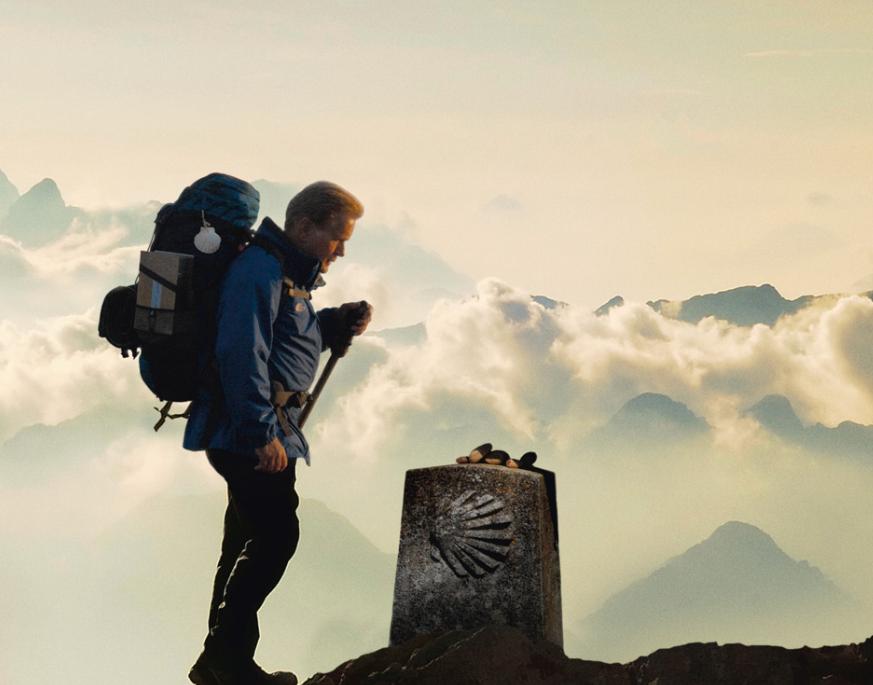
REVIEW: The Way (dir. Emilio Estevez)


Cast: Martin Sheen, Emilio Estevez, James Nesbitt, Deborah Kara Unger, Yorick van Wageningen

Tom is playing golf with his Country Club buddies in California when he receives news that his estranged son Daniel has been killed in a storm in the Pyrenees. Daniel was one day into the famed ‘Camino de Santiago de Compostela’ – an epic two month pilgrimage across the mountains from France to Spain, to the supposed resting place of St James. Tom travels to France to collect the ashes; and after a tormented, sleepless night he decides to take the trip in Daniel’s place, wanting to better understand the son he never knew.

But Tom is not alone for long, for the pilgrimage is a busy route populated with the world’s devout, overweight, and nicotine addicted. Joost is a sensitive and powerful Dutchman hoping to lose enough weight to persuade his wife back into the bedroom; Sarah is a sardonic Canadian with a smoking problem and a difficult past; and Irishman Jack, despite the torrential flow of words pouring from his mouth, is suffering from a rare case of writer’s block. These troubled souls – attracted to Tom’s aching, stubborn silence – form a makeshift gaggle, and help one another on their respective journeys.

Estevez’s script never quite does justice to the indescribable beauty of the pilgrimage. For each of the lonely souls that trudges through these mountains, the journey is an ethereal challenge: mundane and desperate, yet brilliant and life changing. But Estevez imposes a traditional narrative of highs and lows that will be enjoyed by even the most hardened of Hollywood hacks. This is supposed to be an adventure of discovery; but the route is all too familiar, the destination all too obvious.

The script is overly wordy, filled with twee clichés and simple emotional responses for actor and audience alike – do “sad”, do “elated”, do “flustered”. Long sequences that could have been beautifully rendered in silence are filled with the blabbering dialogue of a filmmaker too scared to film quietness in all its untameable beauty. Similarly, Estevez uses crass ghostly hallucinations to evoke the painful feelings of loss and guilt from which Tom is suffering; and every time ‘ghost Daniel’ appears on screen you can almost hear the frowns of those viewers hoping for a touch of subtlety.

But somehow, despite the simple and sometimes obtuse storytelling, there is something strangely intimate and mesmerising about this film. Estevez and his father, Martin Sheen, have a clear artistic chemistry, and a rare level of honesty that translates beautifully onto the screen. Sheen is excellent as Tom: he is fragile and confused, but still ruddy and headstrong. His explanation, to his doctor, that he is “going overseas to bring Daniel home” is a peculiarly American, almost military reaction to grief. We watch the walls of his California Country Club life come crashing down around him, and we know he is scared, exhilarated, and somehow relieved by it all.

Another reason for the mesmerising beauty of the film is the physical location of the pilgrimage. This long, meandering path has been etched into the ridges and fields of the Pyrenees for hundreds of years, and it doesn’t require a religious sensibility to feel overawed by the calm, gentle power of the area. It is not a beauty on the scale of the canyons of Utah or the mountains of Montana, but it is an unassuming beauty that lends the film a sense of eternal hopefulness.

April 01, 2011

REVIEW: Sucker Punch (dir. Zach Snyder)

Cast: Emily Browning, Abbie Cornish, Jena Malone, Vanessa  Hudgens… you get the picture

When Baby Doll tries to murder her drooling, abusive stepfather, she accidentally kills the angelic younger sister that she was trying to protect. She finds herself interred in an impossibly cold, creaking asylum; and locks herself away in an imaginary world to escape the pain. But as she moves around this alternate reality she quickly realises that she has jumped out of the frying pan and into the smoke-stained harem of a ruthless, sleazy pimp called Blue Jones. Fortunately, she discovers allies in the form of her alluring peers: Rocket, Sweet Pea, Blondie, and Amber.

Baby Doll decides to escape from the harem (and the asylum of her reality) with the help of her new accomplices. One essential part of her plan is to distract onlookers with her extraordinarily mesmerising dance routines; but in order to do this, she must remove herself to yet another plane of her imagination. It is this third and final plane that, one presumes, first got Zach Snyder’s juices flowing. It is an alternate reality that sees the burlesque girls dressed in all manner of military and “school girl” attire, brandishing heavy metal weapons and fighting everything from dragons to Nazi zombies. It is so far ‘over-the-top’ that I am amazed Snyder managed to keep it inside the Earth’s atmosphere for long enough to milk a few expensive Los Angeles lunches out of it.

The world will immediately judge this film with Snyder’s CV of comic book adaptations in mind; but this really has more in common with the disjointed stories and simple ‘level’ structures of early video games. The characters unlock new “worlds” and gather “tools” that will aid them in the final mission against the “big boss”. And with Hollywood’s recent myopic fascination with graphic novels, it is almost refreshing to see a filmmaker taking at least some inspiration from the aesthetic (but not the narrative) of retro video games.

Unfortunately, the video game vibe and bizarre fantasy world drown out what could have been an intriguing, noirish story of female teenage vengeance. There is something in the asylum/ harem stories that could have resulted in a fascinating film: a sort of Girl, Interrupted/ Sin City hybrid, with a gang of Lolitas tearing around a neo-noir dystopia reeking revenge on all the adults that have hurt them. But Snyder’s thirst for attention and dick-swinging enormity means that we spend far too much time stomaching the preposterous concoctions of Baby Doll’s deepest imagination instead.

The aesthetics of the film mirror this point perfectly. The first two levels are reminiscent of The Watchmen: using just the right amount of CGI to make the world feel fantastic and “graphic”, but permeating with enough reality to evoke the dirt and ageing smells of an asylum or harem. But when we are thrust into the final plane the CGI just feels tinny and weightless. When CGI is done well it can be an exciting and affecting tool, but when it is done badly it is a bore. It doesn’t matter how “big” the thing on screen is (an army of monsters, a burning cathedral, etc), it is too divorced from anything real to have any value: it is only so many pixels, and it is meaningless.

Emily Browning’s china Baby Doll is a pleasure to watch. Her quivering lip and watering eyes hide a terrifying capacity for calculated violence; she is a cross between a Happy Tree Friend and some darling tween heroine from a Nickelodeon cartoon. The other performances are half-etched: swaying between over-emotional and under-dressed, and usually merging the two.

One thing you cannot deny is the unflinching madness of Snyder’s idea. He isn’t apologising, stuttering or toning things down. As is often the case with this man, he is screaming at the top of his lungs, with a huge smile on his face.

March 30, 2011

REVIEW: Source Code (dir. Duncan Jones)


Cast: Jake Gyllenhaal, Michelle Monaghan, Vera Farmiga, Jeffrey Wright

I won’t mince words: Duncan Jones’ Source Code is a poor film and a disappointing follow up to his debut feature Moon. Where the latter was stylish and striking, the former is muddled, over-bearing, and obvious. I will give you a synopsis and some thoughts, but only because I feel compelled to do so (it is my default setting), and not because the film is worth discussing or arguing over.

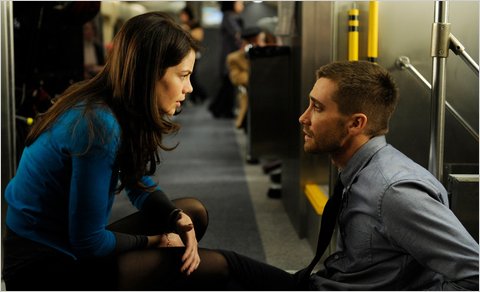
Sean Fentress is on his way to work on his usual Chicago commuter train, with the same people he sees every day, and the same pretty friend, Cristina (Monaghan), that he always manoeuvres himself to sit opposite. But for some reason Sean cant remember a thing about his life: he doesn’t have a clue who all these people are, and he thinks he should be flying a helicopter in the Gulf. Is he mad? No. He is actually Colter Stevens (Gyllenhaal), a helicopter pilot for the US air force.

Stevens has been drafted into a new Top Secret military intelligence programme – Source Code – that manipulates brainwaves, allowing specially selected soldiers to inhabit the bodies of people who have recently passed away. Sean Fentress, along with Cristina and everybody else on the train, died when a terrorist bomb exploded onboard; but it was only a calling card for an unstoppable atrocity planned for downtown Chicago later in the day. Stevens is forced to relive the final 8 minutes of Fentress’ life over and over again until he finds the bomb and reveals the identity of the terrorists. But this is no easy task when he is also trying to find out what has happened to his own body (why isn’t he still flying a helicopter?) and falling in love with Cristina despite being told repeatedly by his superiors that he is only reliving a memory, and she is already dead.

Doesn’t that sound exhilarating? Doesn’t that sound like it could be spun out into an extraordinary psychological action thriller that would have Inception fans prolapsing all over the cinema? Well that may be the case, but the answers to all these exciting premises are as dull and disappointing as you could possibly imagine. As you read my little teaser, your 21st Century brain was registering the most obvious resolutions and dismissing them out of hand, because nobody makes thrillers without interesting twists anymore, right? Well Duncan Jones does, and if you rifle through the waste bin in your brain and find those obvious, boring answers, you will have just spoiled the ending of the film for yourself.

Admittedly, the first half hour of the film, before we begin to worry about where it is all going, is perfectly enjoyable. The basic structure of reliving the same 8 minutes is fairly exhilarating; and it is interesting to feel real anxiety, rather than just suspense, at the knowledge that your hero is going to blow up again in a few minutes. At first the subtle tweaks to the aesthetics and foundations of each replay ensure that the story doesn’t feel stagnant or repetitive; and Jake Gyllenhaal’s “watchability” manages to Spackle over any remaining cracks or worries.

But if you are sitting in the cinema waiting for the terrorist plot to escalate into some electrifying ‘Michael Bay’ catastrophe, while also shaking with anticipation at the thought of some Aronofsky/ Lynch psychological conspiracy thriller… then I just feel sorry for you. The terrorist plot is gallingly, almost offensively, simple; and the psychological element is half-baked and thoughtless. After the masterful consideration and patience of Moon, it seems that Jones has chased the stars and forgotten the gruelling hours of development needed to ensure a truly engaging thriller.

During the climax of the film, as Stevens and Cristina stare at all the naïve faces around the train carriage, Colter remarks, “look at all this life”, and Cristina suggests that if she knew she only had a minute to live, “she would make every second count.” I didn’t cringe, but only because my face was frozen into a mask of incredulity. Where did all the early promise go? How could a collection of talented filmmakers with a decent budget fail so completely to create a film that was in any way interesting or watchable?

To add insult to injury, Jones has also completely reneged on his artistic responsibility to find a cohesive visual framework through which to portray his vision. Moon was a Sci-Fi gem, harking back to the classics of the genre but subverting and invigorating them with new life. It was an astoundingly beautiful fugue to Solaris and Space Odyssey, and it marked the arrival of a new composer of light and images. Source Code has no integrity, no passion, no courage, and no patience. It is a pile of drivel, and surely Jones knows it.