September 30, 2009

REVIEW: Sergio (dir. Greg Barker)


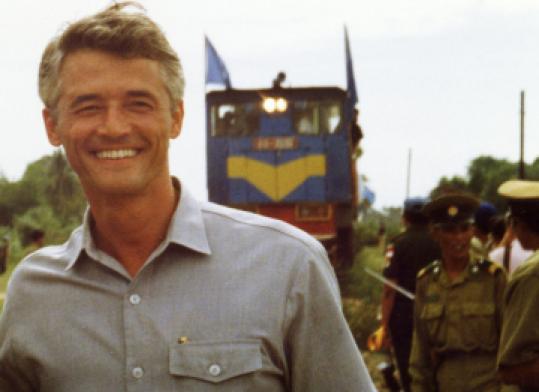
According to filmmaker Greg Barker, Sergio Vieira De Mello is “the most famous man you’ve never heard of.” Having spent his entire adult life working for the UN (he started in the office of the High Commissioner for Refugees after leaving the Sorbonne at the age of 21) Sergio became one of the most influential and renowned figures in global politics. He was one of Kofi Annan’s most trusted advisors, and was rewarded for his selfless passion and dedication with the office of High Commissioner for Human Rights in 2002.

Sergio is probably the only man in modern politics to be referred to, globally, by his first name alone. Not even the Kennedy clan, so beloved and trusted at home, were referred to as ‘Bobby’ or ‘John’ outside the US. From the opening frames of the film, as Sergio flashes his famous grin, it is easy to get the measure of the man: he is enigmatic, charming, handsome, and effortlessly cool; but he is also selfless, and confident in a way that frees him from the urge to win people over with false promises or pompous shows of masculinity. He is the sort of man who could meet Ahmedinijad and George W. Bush on the same day and charm them both into a slightly warmer, less Hawkish, attitude towards global affairs.

Unfortunately, not even Sergio could prevent Bush’s illegal offensive against Iraq in 2003; and while most of the world, including the UN, wanted to distance themselves from the barbaric and thoughtless actions of the US and British governments, they realised that they had a responsibility to help clean up the mess. Of course, Sergio was the first name on everyone’s lips. In 1999, Kofi Annan had sent Sergio to see if he could fashion some sort of peaceful democracy in war-ravaged East Timor. Against all the odds, Sergio succeeded, and it is the only example in history of an occupational force actually helping to bring peace and prosperity to a war-torn region.

Sergio, after so many years living in dangerous territories from Bosnia to Cambodia, had seemed about ready to settle down. His first marriage ended badly, and he rarely had time to see his two sons. Having reached the position of High Commissioner, and finally falling in love again with a Brazilian economic advisor in East Timor, he was reluctant to risk throwing it all away. But a man like Sergio is bound by greater responsibilities than the average human. There are not many people who can claim that the world really needs them in a time of crisis, but Sergio is such a man, and so he took a four-month leave of absence from his post as High Commissioner to serve as Kofi Annan’s special representative in Iraq.

Sergio went about his business as usual. For the man who had negotiated with the Khmer Rouge in their jungle hideouts, Sergio was not scared to go out into the streets of Baghdad and speak to the people and find out what really needed to be done to help this country get back on it’s feet. Sergio had always been an advocate of treating those in need as human beings, rather than large groups of ‘refugees’ that needed to be herded like cattle.

Unfortunately, there has not been a single happy ending during the never-ending nightmare of Operation Iraq Freedom. On August 19, 2003, a truck bomb organised by Zarqawi (Bin Laden’s representative in Iraq) ploughed into the UN headquarters in Baghdad, right below Sergio’s office. Two US army reserves spent hours trying to save Sergio, but without any back up or equipment, they failed to recover his body, and he died buried in the rubble.

Barker’s film reveals the bombing within the first fifteen minutes of the film; and it is one of the most effective and thrilling pieces of documentary filmmaking I have ever seen. We cut back and forth between flashes of a truck speeding along a dirt track, and various interviews with people explaining exactly what was happening in the seconds leading up to the crash. This all builds up to a crescendo as we cut to a conference on the ground floor that was being filmed at the time of the explosion. The timing is perfect, we know what is about to happen but Barker holds off for just long enough so that when the explosion finally rips through the room, and the camera goes black for a few seconds, our nerves are shot to pieces and we feel physically and emotionally devastated.

Up to this point, we really don’t know much about Sergio, except to say that he is an important political and humanitarian figure, and we are more shocked than upset at the attack. But this is probably the most interesting element of this documentary: it is first and foremost a direct account of the attempts of two US army reserves to save Sergio and Gil Loescher (an advisor who was trapped with Sergio). We learn about Sergio’s blessed life through colourful and vibrant flashbacks, and they are all the more heartbreaking for seeing them as brief pockets of hope during the tense and harrowing attempts to save Sergio after the blast.

I did wonder if the film was going to stray into exploitative territory, and use Sergio’s death as a stick to poke the failures of the US occupation in Iraq. Director Barker is an American war correspondent made famous by his caustic examination of the world’s failure to act over the Rwandan genocide. While his integrity, intelligence, and passion have rightly never been called into question, I did wonder what he was getting at by making an entire feature documentary about one death.

But then I realised that Barker had ultimately found something almost hopeful and redeeming in this morbid and heart-breaking story. Even in his death, Sergio encapsulated the selflessness and calm optimism that he had exuded throughout his energetic life. As Barker writes in his director’s statement, “for all it’s tragedy, I ended up making a film that I think is ultimately about hope and the abiding resilience of the human spirit – even in the face of impossible odds. That’s what Sergio taught me, and maybe that’s a quality we can all use a little of right now.”

The key people in the film are the two US army reserves who trued to rescue Sergio (William von Zehle and Andre Valentine) and Carolina, his girlfriend who was present during the blast and refused to leave the site until his body had been recovered. It is Willim von Zehle’s account of the final moments, when they realised Sergio had passed away, that filled my eyes with tears. Von Zehle is one of those unassuming, soft spoken, and quietly intelligent Americans that doesn’t seem to fit with the global image of brash rednecks who never leave their own country save to blow up someone else’s. While Carolina, understandably, has dealt with her grief by speaking about Sergio is poetic and almost metaphysical terms, and Andre Valentino is a slightly irrational evangelist; it is von Zehle who provides the most gut-wrenching, frank account of events. The fact that such a reasonable man finally breaks down on camera and is forced to choke back his tears, speaks volumes about the effect Sergio had on mere mortals, even in his dying. It is also a genuinely powerful cinematic moment, and as I looked around me I noticed that I was not the only audience member gently wiping away the tears from the corner of my eye.

The film comes to a close as von Zehle reads aloud a letter that he felt impelled to write to Kofi Annan. In it he explains the courage, calm, and selflessness that Sergio exhibited in his dying hours. This humble fireman and reserve troop goes on to sum up everything Greg Barker wanted to say about Sergio: death is never easy or positive, but to die in a way that inspires hope in others, and immortalises your character in life, is surely a precious and rare thing.

REVIEW: The Invention of Lying (dir. Ricky Gervais & Matthew Robinson)


Cast: Ricky Gervais, Jennifer Garner, Rob Lowe, Louis C.K., Jonah Hill, Jeffrey Tambor.

Imagine a world where everybody is ruthlessly honest: you arrive for a date only to be informed that you are a huge disappointment; and then your receptionist tells you that the thought of coming into work every morning makes her skin crawl. Well this is the world of Ricky Gervais’ debut feature, ‘The Invention of Lying’.

Our beleaguered and hopeless host in this quirky alternate reality is a “chubby, snub-nosed loser” called Mark (Ricky Gervais). Mark is a lonely, unspectacular man who finds life in a world that lacks the comforting veil of insincerity quite testing. That all changes when Mark, having been fired and threatened with eviction, is driven to an earth-shattering discovery… the concept of lying!

I’m sure you can all guess what happens next: Mark becomes extremely rich and turns his attention to winning over the woman he is infatuated with (Jennifer Garner’s loopy but stunning, Anna). As Mark enjoys his ill-gotten gains, we await the timely arrival of hubris, and Anna’s discover of his ploy, thus propelling us into a ‘dramatic’ third act where he finally learns the error of his ways and wins her back (yawn).

Well I am pleased to report that this is not the route Gervais, and collaborator Matthew Robinson, take. An unexpected turn arrives when Mark, desperate to comfort his dying mother, pretends that there is a pleasant and eternal ‘afterlife’. News spreads fast, and Mark is transformed into a global prophet overnight. The world is changed irrevocably; but while everybody else seems content, Mark finds himself alone and without the solace of ignorance.

This is an infinitely more interesting way of exploring the consequences of lying, and it also provides scope for some classic, caustic, ‘Gervais’ humour regarding the ideas of religion and the stupefying ignorance of modern society. If that all sounds a bit heavy, I promise you it is not… it is really quite funny.

Even the ‘Anna’ storyline, seemingly so formulaic, is at least given a fresh perspective due to the uncomfortable frankness of the characters. The heart-breaking honesty – a point of humour for so much of the film – facilitates a raw and sincere account of why so many people end up in relationships that don’t make them happy (while the people that could make them happy remain alone).

There may be a few too many cheap gags at the expense of the ‘no lying’ concept. A Pepsi advert reads ‘Pepsi: For when they don’t serve Coke’, a lady returns to the dinner table proclaiming the “biggest poop of her life”, etcetera, etcetera. And while some elements of the storytelling are interesting and new, there is no covering up for the fact that the general narrative is one that we have seen a million times before.

Another glaring fault is the virtual absence of Jonah Hill and Louis C.K. Every great rom-com needs a ‘buddy’ to provide extra comic relief; so to under-use two of the finest comic actors in America is criminal. There are a host of star cameos in this film (watch out for Ed Norton as a coke-sniffing cop and Phillip Seymour-Hoffman as a clumsy barman), but it is a shame to have to demote Hill and C.K. to this category when they could have done so much more.

To summarise: this is not a particularly original film – you may not feel shocked or compelled and your breath probably won’t be taken away – but it is an uplifting, genuinely funny, and fairly fresh debut from one of our finest comedic talents.

September 27, 2009

REVIEW: Young@Heart


For the first 45 minutes of this film I was wondering what the point of it was. I could easily appreciate the gimmick of seeing an aging choir from a rural American backwater touring the world with renditions of Jimi Hendrix, Radiohead, Sonic Youth, and the Clash (to name but a few); but I couldn’t understand why this justified a feature-length documentary. The film seems, at first, more like an extended ‘making of’ for the forthcoming tour; and the interviews with individual choir members only serve to highlight the absurdity and gimmickry of the situation (a 92- year old woman with a Kenneth Williams sense of “oh I say!” humour, and a 79-year old man who drives a sports car and refers to his girlfriend as his “squeeze”).

But then one event catapults the film into the realm of emotional depth and social gravity that justifies the acclaim it has received. Bob is one of the older members of the choir, and certainly one of the less fortunate in terms of health. He has been absent from the choir, fighting his illness, but has recently returned.

His first rehearsal is a success, as he sings a duet of Coldplay’s ‘Fix You’ with Fred (who requires an oxygen tank while he sings); but a few days later he seems terribly frail and nervous. He needs three people to help him over to the microphone, where he struggles to force out the words. He seems ashamed and upset at his failure, but we finally find out that he spent the previous day in hospital due to a complication with his lungs! His family tried to force him to stay home, but he demanded to be present at the rehearsal.

Over the next few weeks Bob battled with mortal illness, spending every spare moment learning his lines for the big show. But eventually the battle proved too much, and he gave out. Up until his dying moments Bob was learning his lines and looking forward to performing with his friends and impressing Bob, the choirmaster.

I think that this one event helped the filmmaker, Stephen Walker, to discover what he had wanted to say when he decided to make this documentary. The special thing about these people is not that they don’t mind punk music, but that they help to alleviate our innate fear of old age, and the gradual dilapidation of our earthly bodies, by showing us that there is nothing to be scared of.

They discuss whether or not they have ever been read their last rights as though they were talking about chicken pox… like it’s just something that happens to everyone! When one old woman explains that she was once on death’s door, Bob asks if she saw the ‘white light’ and she replies, “no, I didn’t want to look!”

How many times do we tell ourselves that our lives are just about to begin? Just as soon as this week is through? As soon as I have finished this ‘to do’ list? When January comes around? Once this divorce is finally settled? Our live are plagued by a constant belief that we are about to be reborn, and that our eternal present is just an annoying moment that has to be overcome before the ‘real’ fun starts.

Well at some point these ageing hipsters finally overcame that stigma. They realised that tomorrow will never come, and if they want to enjoy something they have to grab it with both hands and battle to the bitter end – through humiliating hospital gowns and nagging relatives and fading memories – to keep it.

I for one can bear witness to how extraordinary and humbling it is to see the determined and passionate battle man undertakes to defeat the ills that his own body forces upon him.

Another choir member, Joe, has been battling cancer for years, and has undergone an astonishing number of chemotherapy procedures. He ignored the advice of doctors and relatives to join the choir on their European tour, knowing full well that it could be a fatal decision.

Joe dies soon after Bob, finally succumbing the cancer that he had forbade from affecting his life so resolutely. He might have survived for an extra year or so, lying in a hospice somewhere eating tapioca and staring at a chessboard, but he chose to spend his final years pursuing an odd dream that made him happy.

He was surrounded by the people that he cared about, and that cared about him; and while I obviously never saw his final expression, there is not a moment in the weeks leading up to his death when he wasn’t smiling and giggling with his chums. Surely we can all agree that, while cancer eventually took him, Joe thoroughly defeated it while he was alive.

Perhaps this is why the only song the choir never enjoy singing is Sonic Youth’s Schizophrenia. The lyrics, “my future is static, it’s already had it” could never ring true to this purple-haired gaggle of cackling, frenetic OAPs.

The film ends with Fred singing ‘Fix You’ alone, dedicating it to his old friend Bob. It is his last performance with the choir; he has agreed to retire. It was at this point that ‘old people singing pop songs’ stopped being a gimmick, and I realized what was so worthwhile about this choir.

Beyond how charming and silly and heart-warming they all look… Fred brought to the song a pensive sadness and an understated comprehension that Chris Martin, and anybody under the age of 75, could never have imagined possible.

We can’t fight old age, we can’t fight death, and as individuals we are fairly helpless in the face of disease. But we can fight our own lethargy and solemnity. We can refuse to waste a moment of our lives… or at least not waste it wondering what we could be doing with it… or waste it thinking about what we could be doing with it but then not waste even more time looking back on the time we have already wasted and feeling sorry for ourselves!

Finally, the message that these adorable old creatures profess to is thus: accepting the passing of time is the only way to stay… forever young.

September 16, 2009

Cross Media: The Future of the Industry


I have spent the past few weeks researching the great, unchartered frontier of cross-platform, multi-media marketing and distribution. I am currently working for an exciting distribution and exhibition company, Future Shorts Ltd, which organizes monthly short film festivals across the globe, and also organizes the much-hyped Secret Cinema events.

In my travels I have come across some fascinating new platforms for film marketing and distribution. But perhaps the most fascinating story is that of Mdot Strange, an ‘amateur’ filmmaker from the US. I place the word amateur in inverted commas here, not because Strange is merely a pseudo-amateur, but because his very existence calls into question the concept of a divide between ‘amateur’ and ‘professional’ in the modern film industry.

Mdot Strange produced and distributed his debut feature ‘We Are The Strange’ without any help from ‘professionals’. His mantra is that there is no need to pay other people to do your animation, script development, DVD authoring, and distribution for you. As you sit at your computer (or iPhone or whatever else you are using to read this post) you are only moments away from a vast library of manuals and ‘how-to’ guides on every form of technology and software that you could ever come across.

Strange is a self-taught ‘professional’ who learnt animation entirely through free information disseminated through the internet (an 11 year old boy taught him how to animate atomic explosions!) When his film was finished he was left with the usual dilemma of how to put it out there and make people watch it. Blogs and youtube trailers are already old-hat and have been drained of their energy. Strange applied to Sundance Festival as a long shot, but was accepted into the festival by, one can only assume, some glitch in the matrix.

Strange then had a breakthrough when he invited youtube users to send pictures of themselves for him to photoshop into a crowd scene in his film. Nine hundred people sent in their pictures, but the important thing is that all nine hundred of them then posted about it on their blogs. And so Strange learnt his first lesson: Web 2.0 is a selfish and vain beast, and the only way to get people to publicise you is to give them an excuse to publicise themselves in the process. Suddenly Strange has a much larger following on youtube, around 500,000 people following his trailers, etc. He contacted Sundance constantly to tell them how well his film was doing on the internet, and subsequenty learnt his second lesson: if you find a group of people who are terrified that they don’t know enough about the internet (such as most festival organisers) and then tell them that you are the biggest thing on there… they are quite likely to believe you and pay you more attention than you deserve.

And so by the time Sundance came around, there was already a small buzz surrounding ‘We Are The Strange’. A small buzz was not enough to distract people from the bizarre and shamelessly odd nature of the story and animation, but Strange was once again quick to think on his feet and described the film as ‘Strangime’ (an self-proclaimed offshoot of anime). Within weeks the film was featured in Wired magazine as the flagship film in a new wave of animation called ‘Strangime’!

A distributor offered Strange $100,000 for the film, and proceeded to tell Strange that the film was dead because it only appealed to a demographic that didn’t pay for anything (i.e. young people who know about bit torrents.) Strange struggled out of his contracts and decided to go it alone again. He once again used the internet to learn the ins-and-outs of DVD authoring and distribution, and used filmbaby.com to distribute the DVDs that he authored himself. When the film was ripped and disseminated through Bit Torrents, Strange had two options: a) do what the ‘professionals’ would do and file a lawsuit or b) think on his feet.

Strange characteristically chose the second option and proclaimed to the world that his was the first ever ‘Torrential’ release (as opposed to the ‘Theatrical’ that he couldn’t afford). He personally entered the term on Urbandictionary.com and thus was born a new form of film exhibition.

Every step of the way, Mdot Strange has carved out a new path for film distribution (he refuses to take any credit for his maverick production skills, as he refuses to acknowledge the so-called ‘divide’ between professional and amateur in the 21st century.)

There may be no way of copying him, but Strange’s story surely suggests that there is an infinite number of ways to make and distribute films without the help of the ‘professionals’.
I read an article in the RSA journal in March or April (I can’t remember which, and I cant find the magazine now so the details here are a bit sketchy) about an American couple who made a film and uploaded it on to youtube. They had visions of becoming overnight celebrities, with millions of hits and news anchors clamouring for interviews to find out how they discovered such an innovative way of reaching an untapped audience. What this couple didn’t realise, of course, is that the youtube audience has now been well and truly “tapped”, and they are bored.

This couple then somehow managed to find out, from the youtube administrators, the IP addresses of the people that had viewed their film. They discovered that there were odd pockets of people in small geographical areas watching their film, and so they went to these areas, hired town halls and cinemas, and screened the film. They sold merchandise and are currently using the proceeds to fund their next film.

And this, I think, is where the key to the success of this new world of cross-platform marketing and distributing lies: in the amalgamation of innovative, web-based ideas and a firm basis in the tangible world. Youtube didn't work for this couple, but the idea of finding a youtube crowd in the real world and giving them a chance to see a youtube film in a quirky, local setting with like-minded people who they have never met was ingenious.

Mdot Strange may have created an entire film by learning on the web, but he needed the real, interactive elements (persuading people to send photos of themselves, and the various Q&As at Sundance) to generate interest and highlight the bizarre nature of his mission.

'Implementation' is a novel that was ‘published’ entirely on stickers around American cities. Sheets of stickers with sections of the novel printed on them were distributed to willing participants around the US, who then peeled of the stickers and stuck them in odd locations, from lampposts to bathroom stalls. This sticker campaign was accompanied by readings of the novel in clandestine locations, and Since its original ‘release’, it has been translated into Italian and ‘published’ around Pisa, and it has proved to be a major hit.

There are so many companies dedicating their time and resources to this fascinating new frontier of distribution and marketing. Christy Dena’s lecture at last year’s London Film Festival is an excellent introduction to this exciting new world of film.

But at the forefront of this new, innovative, multi-platform frontier of marketing and distribution is Liz Rosenthal, whose company Power to the Pixel has impressed the industry with its ingenious ideas.

Rosenthal was involved with Los Angeles-based New Wave Films, which specialised in ultra-low budget/ digital films. The company helped filmmakers like Christopher Nolan and Joe Carnahan to launch their careers, and Rosenthal has gone on to create eye-catching marketing campaigns for Nolan’s more recent, big-budget, caped crusades.

I am a dull, conservative cineaste and I rarely allow myself to get carried away by technology or that vast area of the film industry that occurs after principle photography. But even I cannot deny the exciting and creative possibilities that exist in this relatively unchartered new frontier of the filmic arts. The polemic between art and advertising really is wavering, and it can’t be long before Rosenthal et al demolish it for good.

August 27, 2009

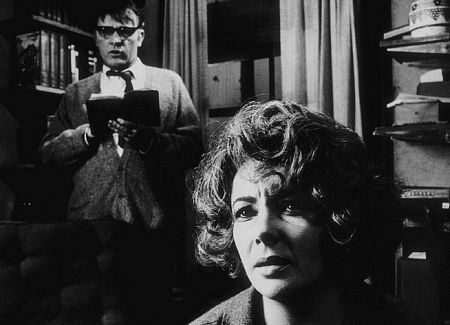
REVIEW: Who's Afraid of Virginia Woolf? (dir. Mike Nichols)


Cast: Elizabeth Taylor, Richard Burton, George Segal, Sandy Dennis

There are many things in this world that I find truly baffling. Why are we destroying our marine habitats so that rich Japanese couples can order expensive soup? Why do we demand that politicians solve all our problems for us, while secretly willing them to fail? Why do we keep expecting Guy Ritchie to make another good film? But perhaps the most baffling of all is the fact that Whose Afraid of Virginia Woolf? has never been released on DVD in Britain.

It is perhaps the finest filmic adaptation of a stage play ever rendered on celluloid. But only American audiences are able to enjoy it in the comfort of their own homes. Adaptations of plays can often be morbidly dull. They rely on the same visceral energy and tension that works so well in a theatre but is almost impossible to transfer onto a video recording that will be reproduced thousands of times and watched at the furthest possible remove (both emotionally and geographically) from where the actors actually performed.

The History Boys is ok, but it was a chirpy and simple play in the first place. Lindsey Anderson’s adaptation of David Storey’s play In Celebration was fairly successful at transferring the dramatic silence and tension of a play, but it was still fairly two-dimensional on a cinematic level.

Whose Afraid of Virgina Woolf? leaps over all of these pitfalls. Every time you watch it, it feels urgent and real. You feel like you are sitting in Martha and George’s house and you hope that Elizabeth Taylor won’t forget her lines as she is carried away in a spitting, passionate frenzy of emotion.

The story concerns a bitter, warring couple in the clutches of despair and alcoholism. Martha is the daughter of the College Dean, and her husband George is in the history department (although as Martha constantly reminds him he is not the history department) They live on the grounds of the college and escape from their dull lives by drinking and playing hurtful and heinous psychological ‘games’ with each other.

On this particular night a young couple, new to the college, arrive for a welcome drink. Nick is a fresh-faced, athletic biology professor and Honey is his mousey, chirpy wife. Over the course of the evening we see the relationships between these four people deteriorate. It may not sound very positive – and it isn’t – but it is wickedly funny at times and filled with the kind of conflict and tension that most filmmakers lie in bed dreaming about.

It is, however, a stage play in every regard: the entire story takes place in George and Martha’s house; the dialogue is dense and fast; and the tension relies on the viewer’s proximity to the awkward silences and spitting tirades of the actors. So why did this film succeed where so many theatrical adaptations have failed? I was about to describe it as ‘one of those inexplicable, synergistic moments in cinema’, but then I realised that this film absolutely does add up to the sum of it’s extraordinary and acclaimed creative parts.

To begin with, it was Ernest Lehman who decided to adapt Edward Albee’s successful stage play. This is the same Ernest Lehman who cut his teeth on the screenplays for North by Northwest, The Sound of Music, and The Sweet Smell of Success to name but a few; I think it is safe to say that the screenplay was in safe hands.

But who could possibly helm such a difficult production? Well Lehman and his Warner Brothers financiers finally settled on a young theatre director who, at the tender age of 32, had directed his first Broadway smash hit (Neil Simon’s Barefoot in the Park) which ran for 1530 performances. His name was Mike Nichols, and he would go on to direct a few fairly successful films like The Graduate, Working Girl, Primary Colours, and Charlie Wilson’s War.

Nichols may be a household name now; but in 1966 he was better known as a comedian and director of quirky Neil Simon plays. This comedic sensitivity certainly came in handy in this production, where the dark humour and poisonous wit espoused by the central characters needs a deft touch to prevent it being overlooked or, which is worse, overly obvious.

But this production really needed a serious talent behind the camera to aid the inexperienced Nichols. And who better than Haskell Wexler, the two-time Oscar winning cinematographer behind One Flew over the Cuckoo’s Nest and Bound for Glory. The camerawork in this film is perhaps the most important device for capturing the immediacy and energy of a play, and Wexler’s camera does this very well.

The cinematography is alive and perfectly attuned to the pace, tone, and emotional resonance of the characters and their story. Every time you feel that, had you been sitting in the stalls, you would be staring intently at George’s face – or gazing, overwhelmed, into the space between Nick and Martha – this is exactly what the camera does.

Wexler also worked on one of my favourite films of all time, John Cassavetes’ Faces. Cassavetes was a theatre man himself; and his films always relied heavily on the performances of his actors. Faces is one of his most stripped down films, and it is very theatrical in its unity of time and space (a pretentious was of saying that it happens in a limited number of locations over a limited timeframe). Wexler’s camerawork in that film is equally successful. He is at once obtrusive and subtle, sporadic and consistent, energetic and whimsical. You are never allowed to stop concentrating and yet you so rarely think to yourself “I am viewing this drama through the eyes of a man looking through a lens 44 years ago.”

But what are a director and his cinematographer without a cast to direct and film? This is one area of pre-production that was fraught with difficulty for Lehman and Warner Brothers. Every Hollywood star from Henry Fonda to Bette David wanted to be involved; but the density of the dialogue and the energy required from the starring duo left Nichols and Fonda doubting these weary and ageing Hollywood veterans.

Looking back, I’m sure no one can imagine anybody else playing George and Martha in this film. Richard Burton had had a mixed career, combining Hollywood epics with smaller independent films. But through the early 1960’s he starred in Tony Richardson’s Look Back In Anger (the first film that he was truly proud of) and John Huston’s The Night of the Iguana. I think that Whose Afraid of Virginia Woolf? was the triumphant pièce de résistance of a veritable legend of the cinema; and it came at a time when he had mastered the complexity of film and the raw emotional power of the theatre.

Elizabeth Taylor was considered by many to be the most beautiful woman in the world in the mid-1960s, and she was certainly one of the most powerful stars in Hollywood after her performance in Cleopatra and Cat on a Hot Tin Roof. But her performance in this film is measured, mature, and selfless.

It is now well known that Burton and Taylor’s marriage was on the rocks by the time they started filming, and their relationship finally broke down as a result of this film. Regardless of what was happening in their private lives, there is no doubt that these are two of the finest and most emotionally honest performances ever given in a Hollywood film. Burton is powerful but easily hurt, Taylor is a frumpish bully with a tender and weary heart. They both cackle and spit their way through a truly powerful, and pessimistic, story of a love that has been lost and is sorely missed.

I apologise if this has been more an extended biography of the cast and crew than a review of the film. But I think it is important to appreciate what Hollywood can do when it puts its mind to something. Warner Brothers assembled a perfect group of people: a young and passionate director, an experienced screenwriter and cinematographer, and a pair of well-known but underrated actors. And they created one of the most beautiful and heart-breaking films in cinema history.

Now I just wish they would share it with the rest of the world!

August 06, 2009

A Tribute to John Hughes


On 6th August 2009, one of the most important figures in the history of American cinema shuffled off this mortal coil while taking a quite walk in New York City. John Hughes may not have been a legend in everybody's eyes – and he certainly won’t be remembered as an amiable character or an especially renowned artist – but he most undoubtedly was an icon, and a creator of icons.

From his debut feature, Sixteen Candles (1984), Hughes enjoyed one of the most untainted runs of popularity and success ever achieved by a filmmaker. To this day Hollywood is reeling from its inability to ensnare this reclusive talent and study him more closely. His unique blend of innocent comedy and caustic realism was always shot through with an eternal hopefulness that may not have been an honest refection of Hughes’ own soul, but most certainly spoke to the young generations of Reagan’s America.

It is impossible to single out one of Hughes films for comment: Sixteen Candles, The Breakfast Club, Weird Science, Ferris Bueller’s Day Off, Planes, Trains, and Automobiles, She’s Having a Baby, and Uncle Buck were all released between 1984 and 1989. Hughes then took an epic hiatus of two years before releasing Curly Sue (1991), his final film as a director.

Who else could lay claim to such an uninterrupted string of successful films? Rob Reiner, the Coens, and Hitchcock are all close contenders (and for the last two probably better filmmakers) but none of them can hold a torch up to Hughes for targeting a generational epoch and owning it outright.

Oh, and just in case you have been checking dates and thought that 1990 was a slow year for John Hughes, he was busy producing a little-known film called Home Alone.

When you add to this roster the films that Hughes wrote but neglected to direct (Baby’s Day Out, Miracle on 34th Street, and Beethoven to name but a few) it is impossible to understand why anybody of my generation isn’t sobbing silently onto their keyboard.

Within this brief but extraordinary body of work lie some of the most iconic characters and movie lines in cinema history. Molly Ringwald became a teen legend after her ‘girl-next-door’ performances in Sixteen Candles and The Breakfast Club, and Matthew Broderick was launched into the limelight following his rambunctious turn as Ferris Bueller.

He had every major studio in Hollywood falling over themselves to co-produce any projects that Hughes Entertainment was considering. Warner Bros turned down Home Alone and allowed Twentieth Century Fox to pick up one of the most successful kids films in history, and from then on it was a constant struggle to get hold of Hughes at his agrarian retreat outside his beloved Chicago.

Hughes may not have been the most friendly or sociable of men; and I see no reason why death should act as a moral antiseptic. He switched agents almost as often as underwear, and was the scourge of low-level film set workers due to his reputation for firing innocent people on a whim. He was infamously reclusive and avoided all contact with the press, and rarely went anywhere near Los Angeles unless it was absolutely necessary. These last two character traits are often cited as proof of Hughes unpleasant manner, but I see know reason why a filmmaker should have a responsibility to cavort around Sunset Blvd. and humour the careless journalists that followed him around. He did all his talking on the screen, and he was good enough to make Hollywood come to him!

His films may not have had anything really important to say, but they still spoke to the everyday children of 1980s America who felt that they were unimportant in the eyes of their parents, schools, and governments. These films should be stored away in the Library of Congress as a perfect representation of the mood and tone of 1980s middle America. They were a generation that had no emo, no Nirvana, no Grateful Dead, just a quite, bespectacled man from Michigan.

July 31, 2009

Hooray for the BFI Southbank!


I had dinner with Neve Campbell the other night. I say ‘dinner’ but it was actually about 1am and we were sat in an almost empty bar at the Park Lane Hilton nursing sore feet from a day at Cartier. This isn’t my normal scene, by the way, but I was invited by a mutual friend and the alcohol was free. It was actually my lack of funds that instigated my conversation with Neve, as she kindly offered me some hummus and a slice of her club sandwich. So anyway, over our hummus and jaw-shatteringly generous portion of turkey and bacon it transpired that Neve lives in London. As an experienced and talented actress living in London, I thought she might be interested in a discussion of the pros and cons of the BFI (fascinating, aren’t I?) Her reply will ripple through the membrane between my ears and skull for a long, long time… “the B-what?”

It was at this moment that I realised something: the lives of every film fan in this city don’t necessarily revolve around that auspicious and hallowed archway beneath Waterloo Bridge. I’m sitting with a globally renowned leading lady who has worked with the likes of Richard Attenborough and Simon Beaufoy, and she doesn’t even know that our national cinema exists!

I suddenly realised that even some of you, my esteemed readers, might not have graced the hallways of that dank, claustrophobic building and felt the weight of cinema history hang down upon your shoulders like a thick down blanket. I have therefore taken it upon myself to explain exactly why everybody in London who likes films needs to spend more time at the BFI.

Firstly, on an historic note, many of you may have visited the site without remembering it. It once housed the Museum of the Moving Image, a world-renowned museum that provided wonder to generations of young film lovers in the 90s. The area taken up by the museum now houses a swanky Benugo bar and a bookshop on all things ‘cinema’. I spent a lot of my childhood at that museum, and the building still holds an air of fantasy and that ethereal magic of the cinema. In a world where the romance and tradition of the cinema has been doused by the behemoth of Multiplexes and vats of Coca Cola, it is so important to have a purely cinematic space like the BFI Southbank where one can soak up the history and magnanimity of the moving image.

On another historical note, this is where the Free Cinema ‘movement’ enjoyed its brief but spectacular residency. In 1956, Lindsay Anderson – along with Karel Reisz, Tony Richardson, and a host of enigmatic young British filmmakers – decided to show a series of films that shared a common spirit: the idea that,

“No film can be too personal.
The image speaks. Sound amplifies and comments.
Size is irrelevant. Perfection is not an aim.
An attitude means a style. A style means an attitude.”

It was considered the first attempt at a genuine National cinema in Britain: the moment we tried to shatter the chains that bound us to Hollywood. The arrival of Channel 4 and the subsequent rise of Frears, Loach, Leigh, et al provided us with a more renowned and identifiable national aesthetic; but this era of British cinema, when Hollywood were desperately waiting to see what Richardson would do after Look Back in Anger, was so important… and it all began under Waterloo Bridge.

On a more practical note, the tickets are much, much cheaper than your local multiplex. There are also no confectionary stands or fizzy drinks, which has the double advantage of saving money and allowing you to watch the whole film without suffering a herd of imbeciles thoughtlessly grazing on monosodium glutamate all around you.

The range of films means that there is something for everybody: For example, Film Fundays, held on one Sunday every month, is a double-bill showing one children’s film and then one family friendly film (usually an old classic for the parents.) It is a great opportunity to spend a day at the pictures, followed (or preceded) by a leisurely walk along the Southbank to give the kids some exercise and fresh air.

At every screening you are provided with a ‘one-sheet’ which usually contains the Sight & Sound review for the film you are watching, followed by an interview with the film’s director. The sheet also provides you with all the production details and a list of similar events and screenings in the coming weeks. It really is a wonderful experience for a film lover; it reminds you that loving films is an artistic passion that should be cherished and nurtured, not a mindless hobby that should be exploited by popcorn vendors.

The final reason, and perhaps my ulterior motive for writing this piece, is that we film lovers are under threat at the BFI Southbank. The extension of the cinema into the old museum a few years ago may have provided us with space for a wonderful bookshop, multimedia gallery, and workspace; but it also provided ample space for a kitsch and overly fashionable bar. Was it Roosevelt that said, “Build it and they will come”? Either way, this is exactly what has happened, and the cinema is now crammed full of ‘hipsters’ and ‘media-types’ in colourful clothes, thick-rimmed glasses, and side partings.

The recent renovation of the riverside bar has amplified the problem by providing a breeding ground for these media darlings. They now occupy both ends of the building and they are closing in fast. Now, if you want to reach the actual screening rooms, you have to force your way through crowds of these mojito-sipping, Skins-loving heretics. We need your help!

Firstly I suggest destroying the Benugo enterprise by showing up in great numbers and spending so long ordering glasses of tap water and complimentary olives that nobody has time to serve our nemeses (who could easily head over to the OXO tower or some other neutral territory). We would then be free to bask in the loneliness of our weird, wonderful, and poverty-inducing love of the cinema.

If you do decide to go on the basis of my recommendation, then please mention my name somewhere, maybe I’ll get some free tickets!