October 02, 2009

REVIEW: Don't Worry About Me (dir. David Morrisey)


Cast: James Brough, Helen Elizabeth

‘Don’t worry about Me’ is the feature film debut of David Morrissey, one of Britain’s finest acting talents. Morrissey seems to have been plying his humble trade on the British airwaves forever. His “big break” was probably his portrayal of Gordon Brown in Stephen Frears ‘The Deal’; and since then he has starred in the superb ‘Blackpool’, and the internationally acclaimed ‘Red Riding’ trilogy (not to mention major motion pictures like ‘The Other Boleyn Girl’ and ‘Captain Corelli’s Mandolin.) I think it is fair to say that, despite his relative lack of experience behind the camera, the debut of such a well-disciplined, talented, and experienced actor (who can count the likes of Stephen Frears and Anand Tucker amongst his friends and associates) is a deservedly well-anticipated event.

The story revolves around “twenty something London lad” David (James Brough), who has skipped work and travelled to Liverpool in the hope of tracking down a one-night stand from the night before. His mission proves to be in vain and so, dejected, he gets drunk and sleeps rough for the night. After being robbed of his last few pennies, he enters a betting shop where a beautiful young employee, Tina (Helen Elizabeth), persuades him to bet on a particular dog. When her tip pays off, a refreshed and elated David begs her to take the rest of the day off and show him the sites of Liverpool. We follow this odd couple around for the rest of the day, as they cheer each other up and eventually learn to confide in each other. There is, of course, the predictable “downfall”, when one of them accidentally offends the other and all seems lost, but then they kiss and make up.

It is fair to say then, that this is not the most original or interesting film of the festival, and it hasn’t lived up to many of its expectations. I am at a loss to understand why such a talented actor, and a man who has worked with the likes of Frears and Tony Grisoni, would choose such a formulaic and unoriginal story for his debut feature. I appreciate that Morrissey is Liverpudlian, and that there was finance to be found there during the city’s term as European Capital of Culture, but there must have been a more interesting story with more depth of character out there somewhere. This is just a drab and uninspiring copy of Richard Linklater’s superb ‘Before Sunrise’. The characters wander around a few iconic sites talking about the nature of friendship and where their lives have gone wrong. But while Linklater’s film was fresh, dynamic, and insightful; in this film the character’s problems are mundane and their insights shallow and obvious.

There is something faintly charming about the story and the characters, and it did make me want to escape to the coast for a day or two, but it is distinctly uncinematic and would have faired much better as a Tuesday night drama on BBC3. For a British audience, I think it is difficult to completely write-off a film that harks back to the Woodfall ‘kitchen sink’ dramas and gritty, slightly romanticised Northern-centric films like ‘Billy Liar’ and ‘The Taste of Honey’. But I’m not sure that this film was consciously trying to build on those films, it just happens to share a location with them. It certainly lacks the sense of wonder and fantasy that those films managed to incorporate into their dull and depressing worlds.

One would have hoped that, at the very least, this film would have boasted some powerful performances due to the status of the director. Alas James Brough, who only got the part because he wrote and starred in the original play, is frankly amateur. I feel like a ratfink for being so negative, but that really is the only word to describe him; he isn’t actually terrible, just unprofessional and lacking in depth.

There isn’t even much to be said of Morrissey’s directing skills: the direction and camera work are as boring and one-dimensional as the story itself, and as drab and grey as the Liverpool skyline they are trying to capture. The opening section of the film is a whirlwind of short, meaningless scenes that fail to capture any emotion or atmosphere, and while the pace improves and allows the actors to find their footing, Morrissey never adds any visual flare to help the story along. A few seconds have been left open here and there for establishing shots of Liverpool, but if the filmmakers think this is enough to warrant the claim that it is “David Morrissey’s homage to his beloved city” then they are sorely mistaken.

The film is shot on video, I assume as a budgetary requirement, and this only serves to heighten the sense of cold detachment that abounds in the film. The footage lacks the softness of film, and while it might help to capture the atmosphere of a cloudy weekday in Liverpool, it fails to capture the emotions of the characters of the ‘feel’ of their world.

This film does have one saving grace however… Helen Elizabeth. Elizabeth is really a joy to watch for most of the film. Similarly to the lead actor, she takes a while to warm to the character and the script, which is awkward and stilted at first. But as the script and the direction and pace open up, so Elizabeth delves into the heart of the character and delivers a performance that many more esteemed actors would have failed to elicit from such a banal script. A scene in a confession box, where Elizabeth finally admits to having had an abortion, is really quite powerful, and almost justifies the making of the film on its own. I like to think that Morrissey had a helping hand here too: the performance has the measured and understated power and the beautifully controlled pace that Morrissey accomplishes so well, and if Helen Elizabeth has benefitted from his great talent and goes on to impress us with this quality of acting again and again, then maybe this film wasn’t a complete waste of time after all.

REVIEW: Passenger Side (dir. Matt Bissonnette)


Cast: Adam Scott, Joel Bissonnette, Vitta Quinn

In a week filled with documentaries and experimental features, I was glad to find that the Friday afternoon screening at this week’s LFF press week was a laid-back, quirky, slacker road movie set in East LA with a soundtrack consisting of Dinosaur Jr, Wilco, Leonard Cohen, and a host of other indie rock legends.

Passenger Side is the story of Michael Brown (Adam Scott), who is awoken on the morning of his 37th birthday by a phone call from his annoying, ex-drug addict brother, Toby (Joel Bissonnette, brother of director Matt). Toby persuades Michael to ditch his girlfriend and spend the day driving him around on some mysterious mission. What follows is a fairly lackadaisical, but never nebulous, talkative journey around the outskirts of Los Angeles.

I say the story is lackadaisical because the conversation mostly revolves around witty banter (I hate that word, but it’s Friday evening so we are sticking with it) that mainly serves to showcase the comedic sensibilities of the filmmaker; I say it is not nebulous, because the dialogue never entirely strays into the very British, Cowardian tradition of talking for talking’s sake. There is a constant undercurrent of sibling rivalry, male bonding, and that childishness that rears its head whenever we spend too much time with our immediate family.

The film is certainly helped by the performances of the lead actors, who at first seem to be pawns delivering funny lines, but eventually learn to gel as a duo and find their character beats marvellously. In a film that relies almost entirely on dialogue, it is essential that the actors work well together, and have a natural sense of timing and delivery, in order to prevent the story from feeling flat or lacking in conflict and dynamism. There is not a lot a filmmaker can do to avoid these pitfalls if the actors don’t work well together, but that certainly isn’t a criticism you could level against this film.

As I have already mentioned, the soundtrack is superb (as long as you like Dinosaur Jr… if you don’t then I must politely ask you to leave this blog!) and works perfectly in harmony with the aesthetic and tone of the overall piece. The cinematography is simple, but captures perfectly the unique atmosphere of East Hollywood and Echo Park. It is an area that can feel hot and claustrophobic, but seconds later a breeze finds its way from the Pacific, through the more famous and wealthy parts of the city, to the cracked and dusty settlement of hedonists and writers that is… Silverlake. This is easily my favourite part of LA, and while funds are tight it is great to be transported there so effectively by a filmmaker.

Don’t get me wrong; there are certainly downsides to this film. The dialogue does, at times, get on one’s nerves with its incessant wit and speed of delivery. I couldn’t help wondering what would happen if you stuck these brothers in a room with the mother and daughter from Gilmore Girls… I shudder to think.

There is also the terrible twist at the end (don’t you hate it when people tell you there is a twist at the end?) It’s not clever and it’s not shocking; it is contrived and insincere and annoying, and it very nearly ruins the ending of the film. In the end Toby finds what he was looking for, and Michael returns home to face another year of loneliness and confusion. I had hoped that he might have learnt something during the film, but alas he has not… and so I was forced to leave the cinema with the realisation that the film had lacked any genuine conflict or drama. But at least it provided some intelligent conversation, beautiful imagery, and a great 90-minutes of rock music to set my Friday evening off on the right track. As I sign off, I am looking forward to pressing play on It’s a Shame About Ray, and cracking open the first beer of the weekend. Farewell.

October 01, 2009

REVIEW: Trash Humpers (dir. Harmony Korine)


A film should, according to Godard, have a beginning, middle, and end (even if they aren’t in that particular order). I am, personally, a huge fan of this ideal. It is the careful structuring of a story that engages the audiences and whisks them away into the world of the characters.

I am willing to make allowances in certain cases: I would argue that many of John Cassavetes’ films lacked any coherent structure, and yet they still proved to be some of the most engaging, powerful, and dramatic explorations of character in the history of the cinema. But then, Cassavetes was exploring fascinating people that we can all engage with: a distraught husband who has lost the ability to reach out to his mentally-frail wife; an ageing actress who has lost the will to carry on; a strip-club owner who has forgotten why he loves the Sunset strip. Cassavetes uses improvisation, ad hoc camera-work, and fluid storylines to ensnare the audience and take them on a captivating journey into the world of his characters.

Harmony Korine has never been a stalwart of classical narrative structures, but the characters he chose to study were at least classical in their innate ability to encapsulate and create conflict. His first writing credit was on Larry Clark’s much-lauded debut feature, ‘Kids’ (1995). A film that felt a lot like Cassavetes’ character studies, ‘Kids’ helped blur the lines between feature filmmaking and the incisive, honest photo-journalism that made Larry Clark a household name in the early 1970s. While Korine’s script did loosely adhere to a narrative structure, it was clear that he was much more interested in exploring fragments of his characters lives, and building up a more layered, web-like understanding of the characters that would stick in the minds of the viewers, rather than simply forcing the viewer to empathise with the characters for 90-110 minutes before discarding them on the way home from the cinema.

Korine’s next project, which also constituted his directorial debut, was ‘Gummo’ (1997). ‘Gummo’ was the story of a group of teenagers stranded in a tornado-ravaged Ohio town; and it proved to be another successful experiment in non-linear storytelling. The barren, hopeless surroundings and the meaninglessness of the characters actions were perfectly reflected in the confused, episodic nature of the story.

I am therefore usually willing to align myself with Harmony Korine, despite my personal preference for traditional narrative storytelling. He has a rare ability to create fascinating characters, and expose the drama, conflict, and emotion at the heart of theses characters and their surroundings.

I must admit, however, that I was slightly more suspect than usual when I took my seat in the BFI Southbank this afternoon for the London Film Festival press screening of Korine’s latest film… ‘Trash Humpers’. The film follows a trio of geriatric perverts who butcher innocent people and teach a primary school student to crush a doll’s skull with a hammer.

While ‘Kids’, and even ‘Gummo’, had some semblance of narrative and traditional character arcs, ‘Trash Humpers’ is a helter-skelter, chaotic home video, seemingly shot by one of the very psychotic creatures we are watching. I can’t imagine Korine ever wants us to feel empathy for these people, nor does he seem to make any effort to explore them, or justify his decision to make a film about them. There is no semblance of realism in the film, and no attempt to make the film aesthetically attractive. But I cannot deny that I sat there, thoroughly engrossed, for the entire 78-minute running time.

The three main characters are not actually elderly, they are really young men and women dressed up in prosthetics. They closely resemble the Jackass crew in the sections of their feature-length films where they dressed up as old people to perform pranks on unwitting members of the public. I mention this connection not so much as a visual aid, but because it may explain why I noticed a dark humour and childish mischief in the film. The three characters are an unsettling mixture: the power and virility of young adults, mixed with the naïveté and irresponsibility of small children, all wrapped up in the decaying cadavers of the elderly.

Korine, in his director’s statement, explains that the characters were inspired by a group of, presumably homeless, elderly people who used to hang out under a bridge near his childhood home and hump trash cans while laughing and communicating in garbled noises. It is a testament to Korine’s odd artistic mind that he never let go of this childish memory. Many people would have adapted the memory every time they remembered it, slowly explaining away the mysteries until it was just another banal childhood experience. But Korine refused to explain this memory to himself; he preserved the thrilling mystery of it, and managed to transfer it onto video without losing the raw, almost horrifying childish simplicity of the memory.

These are people that only a child could imagine in a nightmare, but suddenly we are face to face with them, with only a cheap video camera to protect us. We are forced to mingle with them and listen to their gargling, screeching noises and destructive, irrational behaviour. Sometimes we are just standing next to them in a field while they hump, and masturbate, trees. But sometimes we find ourselves in a playground with them while they teach a child to strangle a doll with a plastic bag, or sitting at some warped house party where one of them has beaten a man to death and is standing in a pool of blood in the kitchen… laughing.

Korine has done a fantastic job of making the film look as cheap and shoddily made as possible: the whole film looks as if it has been edited in camera, and even the credits have been created in the cheapest possible video format. At no point from start to finish do we have cause to release ourselves from the illusion and gasp with relief that this really was just a stunt by one of the mavericks of American cinema.

The film never really employs any traditional conventions to illicit fear in us; but it is an unsettling concept and it shares with the horror genre that visceral, disgusted feeling that we get when we desperately want to escape from something but we cant run away. To quote Korine’s director’s statement again, “it is a new type of horror; palpable and raw.”

September 30, 2009

REVIEW: Sergio (dir. Greg Barker)


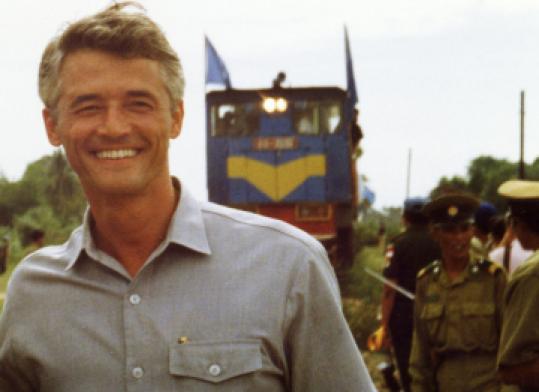
According to filmmaker Greg Barker, Sergio Vieira De Mello is “the most famous man you’ve never heard of.” Having spent his entire adult life working for the UN (he started in the office of the High Commissioner for Refugees after leaving the Sorbonne at the age of 21) Sergio became one of the most influential and renowned figures in global politics. He was one of Kofi Annan’s most trusted advisors, and was rewarded for his selfless passion and dedication with the office of High Commissioner for Human Rights in 2002.

Sergio is probably the only man in modern politics to be referred to, globally, by his first name alone. Not even the Kennedy clan, so beloved and trusted at home, were referred to as ‘Bobby’ or ‘John’ outside the US. From the opening frames of the film, as Sergio flashes his famous grin, it is easy to get the measure of the man: he is enigmatic, charming, handsome, and effortlessly cool; but he is also selfless, and confident in a way that frees him from the urge to win people over with false promises or pompous shows of masculinity. He is the sort of man who could meet Ahmedinijad and George W. Bush on the same day and charm them both into a slightly warmer, less Hawkish, attitude towards global affairs.

Unfortunately, not even Sergio could prevent Bush’s illegal offensive against Iraq in 2003; and while most of the world, including the UN, wanted to distance themselves from the barbaric and thoughtless actions of the US and British governments, they realised that they had a responsibility to help clean up the mess. Of course, Sergio was the first name on everyone’s lips. In 1999, Kofi Annan had sent Sergio to see if he could fashion some sort of peaceful democracy in war-ravaged East Timor. Against all the odds, Sergio succeeded, and it is the only example in history of an occupational force actually helping to bring peace and prosperity to a war-torn region.

Sergio, after so many years living in dangerous territories from Bosnia to Cambodia, had seemed about ready to settle down. His first marriage ended badly, and he rarely had time to see his two sons. Having reached the position of High Commissioner, and finally falling in love again with a Brazilian economic advisor in East Timor, he was reluctant to risk throwing it all away. But a man like Sergio is bound by greater responsibilities than the average human. There are not many people who can claim that the world really needs them in a time of crisis, but Sergio is such a man, and so he took a four-month leave of absence from his post as High Commissioner to serve as Kofi Annan’s special representative in Iraq.

Sergio went about his business as usual. For the man who had negotiated with the Khmer Rouge in their jungle hideouts, Sergio was not scared to go out into the streets of Baghdad and speak to the people and find out what really needed to be done to help this country get back on it’s feet. Sergio had always been an advocate of treating those in need as human beings, rather than large groups of ‘refugees’ that needed to be herded like cattle.

Unfortunately, there has not been a single happy ending during the never-ending nightmare of Operation Iraq Freedom. On August 19, 2003, a truck bomb organised by Zarqawi (Bin Laden’s representative in Iraq) ploughed into the UN headquarters in Baghdad, right below Sergio’s office. Two US army reserves spent hours trying to save Sergio, but without any back up or equipment, they failed to recover his body, and he died buried in the rubble.

Barker’s film reveals the bombing within the first fifteen minutes of the film; and it is one of the most effective and thrilling pieces of documentary filmmaking I have ever seen. We cut back and forth between flashes of a truck speeding along a dirt track, and various interviews with people explaining exactly what was happening in the seconds leading up to the crash. This all builds up to a crescendo as we cut to a conference on the ground floor that was being filmed at the time of the explosion. The timing is perfect, we know what is about to happen but Barker holds off for just long enough so that when the explosion finally rips through the room, and the camera goes black for a few seconds, our nerves are shot to pieces and we feel physically and emotionally devastated.

Up to this point, we really don’t know much about Sergio, except to say that he is an important political and humanitarian figure, and we are more shocked than upset at the attack. But this is probably the most interesting element of this documentary: it is first and foremost a direct account of the attempts of two US army reserves to save Sergio and Gil Loescher (an advisor who was trapped with Sergio). We learn about Sergio’s blessed life through colourful and vibrant flashbacks, and they are all the more heartbreaking for seeing them as brief pockets of hope during the tense and harrowing attempts to save Sergio after the blast.

I did wonder if the film was going to stray into exploitative territory, and use Sergio’s death as a stick to poke the failures of the US occupation in Iraq. Director Barker is an American war correspondent made famous by his caustic examination of the world’s failure to act over the Rwandan genocide. While his integrity, intelligence, and passion have rightly never been called into question, I did wonder what he was getting at by making an entire feature documentary about one death.

But then I realised that Barker had ultimately found something almost hopeful and redeeming in this morbid and heart-breaking story. Even in his death, Sergio encapsulated the selflessness and calm optimism that he had exuded throughout his energetic life. As Barker writes in his director’s statement, “for all it’s tragedy, I ended up making a film that I think is ultimately about hope and the abiding resilience of the human spirit – even in the face of impossible odds. That’s what Sergio taught me, and maybe that’s a quality we can all use a little of right now.”

The key people in the film are the two US army reserves who trued to rescue Sergio (William von Zehle and Andre Valentine) and Carolina, his girlfriend who was present during the blast and refused to leave the site until his body had been recovered. It is Willim von Zehle’s account of the final moments, when they realised Sergio had passed away, that filled my eyes with tears. Von Zehle is one of those unassuming, soft spoken, and quietly intelligent Americans that doesn’t seem to fit with the global image of brash rednecks who never leave their own country save to blow up someone else’s. While Carolina, understandably, has dealt with her grief by speaking about Sergio is poetic and almost metaphysical terms, and Andre Valentino is a slightly irrational evangelist; it is von Zehle who provides the most gut-wrenching, frank account of events. The fact that such a reasonable man finally breaks down on camera and is forced to choke back his tears, speaks volumes about the effect Sergio had on mere mortals, even in his dying. It is also a genuinely powerful cinematic moment, and as I looked around me I noticed that I was not the only audience member gently wiping away the tears from the corner of my eye.

The film comes to a close as von Zehle reads aloud a letter that he felt impelled to write to Kofi Annan. In it he explains the courage, calm, and selflessness that Sergio exhibited in his dying hours. This humble fireman and reserve troop goes on to sum up everything Greg Barker wanted to say about Sergio: death is never easy or positive, but to die in a way that inspires hope in others, and immortalises your character in life, is surely a precious and rare thing.

REVIEW: The Invention of Lying (dir. Ricky Gervais & Matthew Robinson)


Cast: Ricky Gervais, Jennifer Garner, Rob Lowe, Louis C.K., Jonah Hill, Jeffrey Tambor.

Imagine a world where everybody is ruthlessly honest: you arrive for a date only to be informed that you are a huge disappointment; and then your receptionist tells you that the thought of coming into work every morning makes her skin crawl. Well this is the world of Ricky Gervais’ debut feature, ‘The Invention of Lying’.

Our beleaguered and hopeless host in this quirky alternate reality is a “chubby, snub-nosed loser” called Mark (Ricky Gervais). Mark is a lonely, unspectacular man who finds life in a world that lacks the comforting veil of insincerity quite testing. That all changes when Mark, having been fired and threatened with eviction, is driven to an earth-shattering discovery… the concept of lying!

I’m sure you can all guess what happens next: Mark becomes extremely rich and turns his attention to winning over the woman he is infatuated with (Jennifer Garner’s loopy but stunning, Anna). As Mark enjoys his ill-gotten gains, we await the timely arrival of hubris, and Anna’s discover of his ploy, thus propelling us into a ‘dramatic’ third act where he finally learns the error of his ways and wins her back (yawn).

Well I am pleased to report that this is not the route Gervais, and collaborator Matthew Robinson, take. An unexpected turn arrives when Mark, desperate to comfort his dying mother, pretends that there is a pleasant and eternal ‘afterlife’. News spreads fast, and Mark is transformed into a global prophet overnight. The world is changed irrevocably; but while everybody else seems content, Mark finds himself alone and without the solace of ignorance.

This is an infinitely more interesting way of exploring the consequences of lying, and it also provides scope for some classic, caustic, ‘Gervais’ humour regarding the ideas of religion and the stupefying ignorance of modern society. If that all sounds a bit heavy, I promise you it is not… it is really quite funny.

Even the ‘Anna’ storyline, seemingly so formulaic, is at least given a fresh perspective due to the uncomfortable frankness of the characters. The heart-breaking honesty – a point of humour for so much of the film – facilitates a raw and sincere account of why so many people end up in relationships that don’t make them happy (while the people that could make them happy remain alone).

There may be a few too many cheap gags at the expense of the ‘no lying’ concept. A Pepsi advert reads ‘Pepsi: For when they don’t serve Coke’, a lady returns to the dinner table proclaiming the “biggest poop of her life”, etcetera, etcetera. And while some elements of the storytelling are interesting and new, there is no covering up for the fact that the general narrative is one that we have seen a million times before.

Another glaring fault is the virtual absence of Jonah Hill and Louis C.K. Every great rom-com needs a ‘buddy’ to provide extra comic relief; so to under-use two of the finest comic actors in America is criminal. There are a host of star cameos in this film (watch out for Ed Norton as a coke-sniffing cop and Phillip Seymour-Hoffman as a clumsy barman), but it is a shame to have to demote Hill and C.K. to this category when they could have done so much more.

To summarise: this is not a particularly original film – you may not feel shocked or compelled and your breath probably won’t be taken away – but it is an uplifting, genuinely funny, and fairly fresh debut from one of our finest comedic talents.

September 27, 2009

REVIEW: Young@Heart


For the first 45 minutes of this film I was wondering what the point of it was. I could easily appreciate the gimmick of seeing an aging choir from a rural American backwater touring the world with renditions of Jimi Hendrix, Radiohead, Sonic Youth, and the Clash (to name but a few); but I couldn’t understand why this justified a feature-length documentary. The film seems, at first, more like an extended ‘making of’ for the forthcoming tour; and the interviews with individual choir members only serve to highlight the absurdity and gimmickry of the situation (a 92- year old woman with a Kenneth Williams sense of “oh I say!” humour, and a 79-year old man who drives a sports car and refers to his girlfriend as his “squeeze”).

But then one event catapults the film into the realm of emotional depth and social gravity that justifies the acclaim it has received. Bob is one of the older members of the choir, and certainly one of the less fortunate in terms of health. He has been absent from the choir, fighting his illness, but has recently returned.

His first rehearsal is a success, as he sings a duet of Coldplay’s ‘Fix You’ with Fred (who requires an oxygen tank while he sings); but a few days later he seems terribly frail and nervous. He needs three people to help him over to the microphone, where he struggles to force out the words. He seems ashamed and upset at his failure, but we finally find out that he spent the previous day in hospital due to a complication with his lungs! His family tried to force him to stay home, but he demanded to be present at the rehearsal.

Over the next few weeks Bob battled with mortal illness, spending every spare moment learning his lines for the big show. But eventually the battle proved too much, and he gave out. Up until his dying moments Bob was learning his lines and looking forward to performing with his friends and impressing Bob, the choirmaster.

I think that this one event helped the filmmaker, Stephen Walker, to discover what he had wanted to say when he decided to make this documentary. The special thing about these people is not that they don’t mind punk music, but that they help to alleviate our innate fear of old age, and the gradual dilapidation of our earthly bodies, by showing us that there is nothing to be scared of.

They discuss whether or not they have ever been read their last rights as though they were talking about chicken pox… like it’s just something that happens to everyone! When one old woman explains that she was once on death’s door, Bob asks if she saw the ‘white light’ and she replies, “no, I didn’t want to look!”

How many times do we tell ourselves that our lives are just about to begin? Just as soon as this week is through? As soon as I have finished this ‘to do’ list? When January comes around? Once this divorce is finally settled? Our live are plagued by a constant belief that we are about to be reborn, and that our eternal present is just an annoying moment that has to be overcome before the ‘real’ fun starts.

Well at some point these ageing hipsters finally overcame that stigma. They realised that tomorrow will never come, and if they want to enjoy something they have to grab it with both hands and battle to the bitter end – through humiliating hospital gowns and nagging relatives and fading memories – to keep it.

I for one can bear witness to how extraordinary and humbling it is to see the determined and passionate battle man undertakes to defeat the ills that his own body forces upon him.

Another choir member, Joe, has been battling cancer for years, and has undergone an astonishing number of chemotherapy procedures. He ignored the advice of doctors and relatives to join the choir on their European tour, knowing full well that it could be a fatal decision.

Joe dies soon after Bob, finally succumbing the cancer that he had forbade from affecting his life so resolutely. He might have survived for an extra year or so, lying in a hospice somewhere eating tapioca and staring at a chessboard, but he chose to spend his final years pursuing an odd dream that made him happy.

He was surrounded by the people that he cared about, and that cared about him; and while I obviously never saw his final expression, there is not a moment in the weeks leading up to his death when he wasn’t smiling and giggling with his chums. Surely we can all agree that, while cancer eventually took him, Joe thoroughly defeated it while he was alive.

Perhaps this is why the only song the choir never enjoy singing is Sonic Youth’s Schizophrenia. The lyrics, “my future is static, it’s already had it” could never ring true to this purple-haired gaggle of cackling, frenetic OAPs.

The film ends with Fred singing ‘Fix You’ alone, dedicating it to his old friend Bob. It is his last performance with the choir; he has agreed to retire. It was at this point that ‘old people singing pop songs’ stopped being a gimmick, and I realized what was so worthwhile about this choir.

Beyond how charming and silly and heart-warming they all look… Fred brought to the song a pensive sadness and an understated comprehension that Chris Martin, and anybody under the age of 75, could never have imagined possible.

We can’t fight old age, we can’t fight death, and as individuals we are fairly helpless in the face of disease. But we can fight our own lethargy and solemnity. We can refuse to waste a moment of our lives… or at least not waste it wondering what we could be doing with it… or waste it thinking about what we could be doing with it but then not waste even more time looking back on the time we have already wasted and feeling sorry for ourselves!

Finally, the message that these adorable old creatures profess to is thus: accepting the passing of time is the only way to stay… forever young.

September 16, 2009

Cross Media: The Future of the Industry


I have spent the past few weeks researching the great, unchartered frontier of cross-platform, multi-media marketing and distribution. I am currently working for an exciting distribution and exhibition company, Future Shorts Ltd, which organizes monthly short film festivals across the globe, and also organizes the much-hyped Secret Cinema events.

In my travels I have come across some fascinating new platforms for film marketing and distribution. But perhaps the most fascinating story is that of Mdot Strange, an ‘amateur’ filmmaker from the US. I place the word amateur in inverted commas here, not because Strange is merely a pseudo-amateur, but because his very existence calls into question the concept of a divide between ‘amateur’ and ‘professional’ in the modern film industry.

Mdot Strange produced and distributed his debut feature ‘We Are The Strange’ without any help from ‘professionals’. His mantra is that there is no need to pay other people to do your animation, script development, DVD authoring, and distribution for you. As you sit at your computer (or iPhone or whatever else you are using to read this post) you are only moments away from a vast library of manuals and ‘how-to’ guides on every form of technology and software that you could ever come across.

Strange is a self-taught ‘professional’ who learnt animation entirely through free information disseminated through the internet (an 11 year old boy taught him how to animate atomic explosions!) When his film was finished he was left with the usual dilemma of how to put it out there and make people watch it. Blogs and youtube trailers are already old-hat and have been drained of their energy. Strange applied to Sundance Festival as a long shot, but was accepted into the festival by, one can only assume, some glitch in the matrix.

Strange then had a breakthrough when he invited youtube users to send pictures of themselves for him to photoshop into a crowd scene in his film. Nine hundred people sent in their pictures, but the important thing is that all nine hundred of them then posted about it on their blogs. And so Strange learnt his first lesson: Web 2.0 is a selfish and vain beast, and the only way to get people to publicise you is to give them an excuse to publicise themselves in the process. Suddenly Strange has a much larger following on youtube, around 500,000 people following his trailers, etc. He contacted Sundance constantly to tell them how well his film was doing on the internet, and subsequenty learnt his second lesson: if you find a group of people who are terrified that they don’t know enough about the internet (such as most festival organisers) and then tell them that you are the biggest thing on there… they are quite likely to believe you and pay you more attention than you deserve.

And so by the time Sundance came around, there was already a small buzz surrounding ‘We Are The Strange’. A small buzz was not enough to distract people from the bizarre and shamelessly odd nature of the story and animation, but Strange was once again quick to think on his feet and described the film as ‘Strangime’ (an self-proclaimed offshoot of anime). Within weeks the film was featured in Wired magazine as the flagship film in a new wave of animation called ‘Strangime’!

A distributor offered Strange $100,000 for the film, and proceeded to tell Strange that the film was dead because it only appealed to a demographic that didn’t pay for anything (i.e. young people who know about bit torrents.) Strange struggled out of his contracts and decided to go it alone again. He once again used the internet to learn the ins-and-outs of DVD authoring and distribution, and used filmbaby.com to distribute the DVDs that he authored himself. When the film was ripped and disseminated through Bit Torrents, Strange had two options: a) do what the ‘professionals’ would do and file a lawsuit or b) think on his feet.

Strange characteristically chose the second option and proclaimed to the world that his was the first ever ‘Torrential’ release (as opposed to the ‘Theatrical’ that he couldn’t afford). He personally entered the term on Urbandictionary.com and thus was born a new form of film exhibition.

Every step of the way, Mdot Strange has carved out a new path for film distribution (he refuses to take any credit for his maverick production skills, as he refuses to acknowledge the so-called ‘divide’ between professional and amateur in the 21st century.)

There may be no way of copying him, but Strange’s story surely suggests that there is an infinite number of ways to make and distribute films without the help of the ‘professionals’.
I read an article in the RSA journal in March or April (I can’t remember which, and I cant find the magazine now so the details here are a bit sketchy) about an American couple who made a film and uploaded it on to youtube. They had visions of becoming overnight celebrities, with millions of hits and news anchors clamouring for interviews to find out how they discovered such an innovative way of reaching an untapped audience. What this couple didn’t realise, of course, is that the youtube audience has now been well and truly “tapped”, and they are bored.

This couple then somehow managed to find out, from the youtube administrators, the IP addresses of the people that had viewed their film. They discovered that there were odd pockets of people in small geographical areas watching their film, and so they went to these areas, hired town halls and cinemas, and screened the film. They sold merchandise and are currently using the proceeds to fund their next film.

And this, I think, is where the key to the success of this new world of cross-platform marketing and distributing lies: in the amalgamation of innovative, web-based ideas and a firm basis in the tangible world. Youtube didn't work for this couple, but the idea of finding a youtube crowd in the real world and giving them a chance to see a youtube film in a quirky, local setting with like-minded people who they have never met was ingenious.

Mdot Strange may have created an entire film by learning on the web, but he needed the real, interactive elements (persuading people to send photos of themselves, and the various Q&As at Sundance) to generate interest and highlight the bizarre nature of his mission.

'Implementation' is a novel that was ‘published’ entirely on stickers around American cities. Sheets of stickers with sections of the novel printed on them were distributed to willing participants around the US, who then peeled of the stickers and stuck them in odd locations, from lampposts to bathroom stalls. This sticker campaign was accompanied by readings of the novel in clandestine locations, and Since its original ‘release’, it has been translated into Italian and ‘published’ around Pisa, and it has proved to be a major hit.

There are so many companies dedicating their time and resources to this fascinating new frontier of distribution and marketing. Christy Dena’s lecture at last year’s London Film Festival is an excellent introduction to this exciting new world of film.

But at the forefront of this new, innovative, multi-platform frontier of marketing and distribution is Liz Rosenthal, whose company Power to the Pixel has impressed the industry with its ingenious ideas.

Rosenthal was involved with Los Angeles-based New Wave Films, which specialised in ultra-low budget/ digital films. The company helped filmmakers like Christopher Nolan and Joe Carnahan to launch their careers, and Rosenthal has gone on to create eye-catching marketing campaigns for Nolan’s more recent, big-budget, caped crusades.

I am a dull, conservative cineaste and I rarely allow myself to get carried away by technology or that vast area of the film industry that occurs after principle photography. But even I cannot deny the exciting and creative possibilities that exist in this relatively unchartered new frontier of the filmic arts. The polemic between art and advertising really is wavering, and it can’t be long before Rosenthal et al demolish it for good.